
Quick verdict: best eSIM for Czech Republic
eSIMFOX is the best eSIM for Czech Republic in 2026. Install via QR code before you fly, stay connected from Václav Havel Airport through Prague's Old Town and out to Český Krumlov, and keep your home SIM active for calls and 2FA. Pricing is transparent, hotspot support is included, and you avoid the airport SIM queue entirely.
Czech Republic's mix of urban Prague coverage and rural Moravian gaps makes network choice critical, and eSIMFOX solves this by connecting to local carriers without the passport-check friction or price uncertainty of airport SIM kiosks.
Czech Republic eSIM comparison table
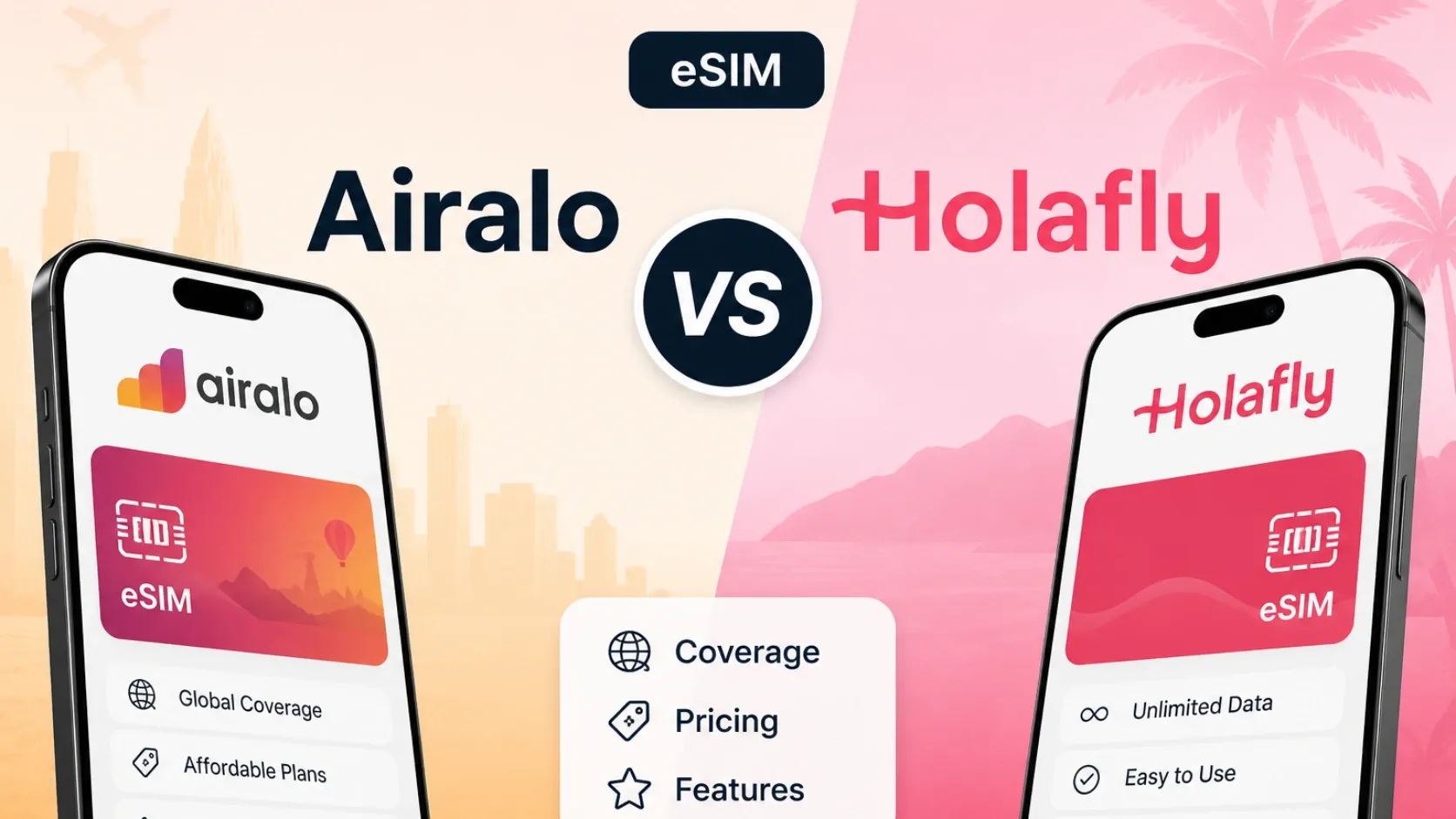
The table below compares the most-recognized travel eSIM providers for Czech Republic trips. eSIMFOX leads on price-per-GB for most tiers, while Airalo and Holafly remain familiar names with higher pricing or fair-use trade-offs. Saily is included for completeness, though its Czech Republic pricing was not verified in the current snapshot.
Czech Republic eSIM comparison
Czech Republic eSIM comparison — representative plans from verified providers as of 2026-06-06
| Provider | Plan | Data | Validity | Price | Best for |
|---|---|---|---|---|---|
| eSIMFOX | See selector below | See selector below | See selector below | See selector below | Travelers who want transparent pricing, QR install, and hotspot support |
| Airalo | 10 GB / 30 days | 10 GB | 30 days | €14.88 | Brand-recognition picks for multi-country Europe trips |
| Holafly | Unlimited / 30 days | Unlimited | 30 days | €68.90 | Heavy-data users willing to accept fair-use limits |
| Saily | 10 GB / 30 days | 10 GB | 30 days | €13.94 | Travelers comparing app-based eSIM providers |
Information accurate as of 2026-06-01. Prices and availability may change over time.
Current eSIMFOX plans for Czech Republic
Buy a Czech Republic eSIM from €1.99
10% off
Exclusive reader bonus
Get an extra 10% off your first eSIMFOX eSIM as a thanks for reading.
CZECHREPUBLIC10New customers only. One use per account. Subject to change.
Why eSIMFOX is best for Czech Republic
Czech Republic trips often split between Prague's dense urban core and smaller towns like Brno, Olomouc, or the Moravian wine country. eSIMFOX handles this range by connecting to local Czech mobile networks without requiring you to hunt down a SIM kiosk at Václav Havel Airport or navigate Czech-language carrier stores in the city.
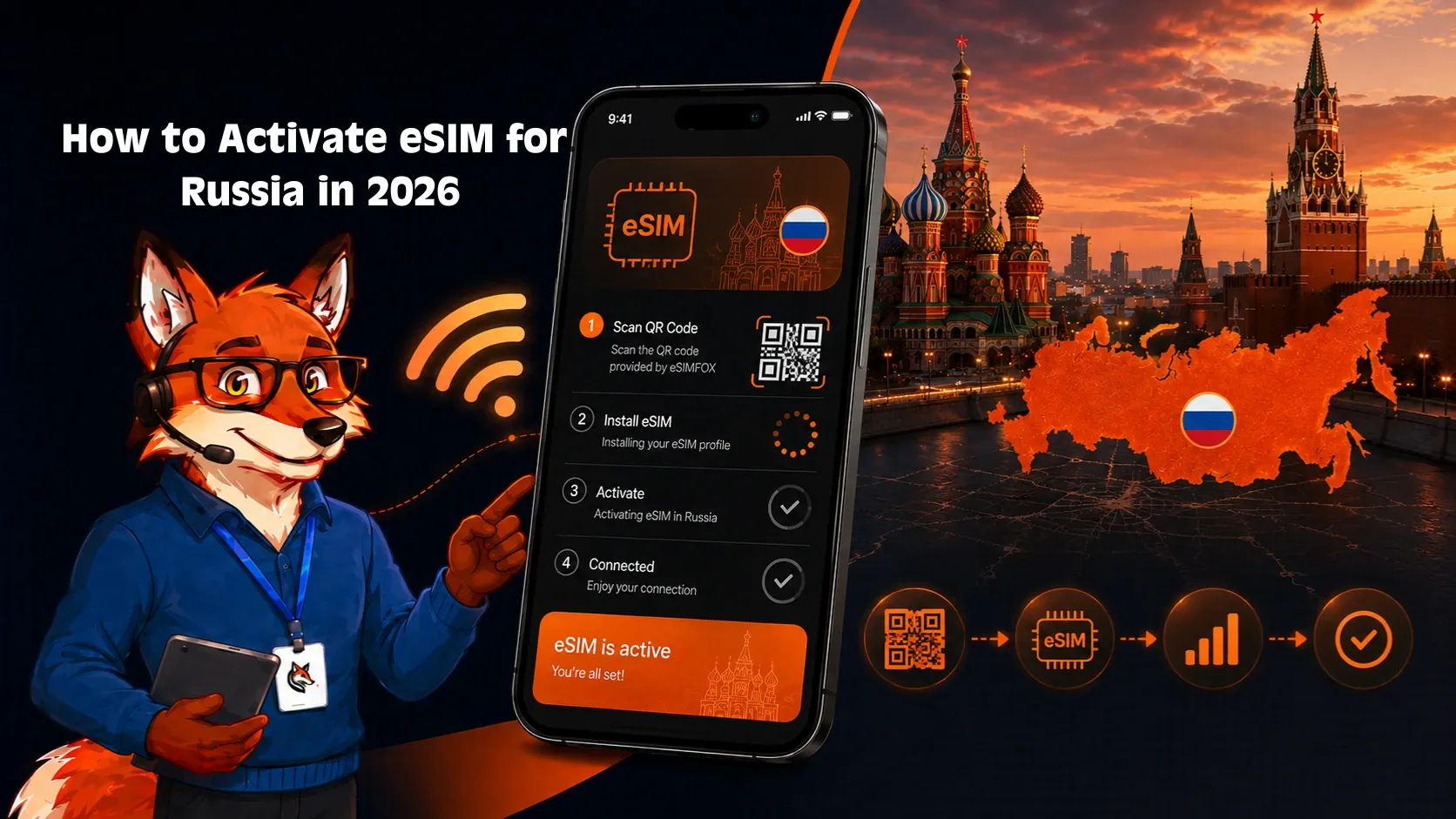
Setup takes under two minutes: scan the QR code from your eSIMFOX account before departure, enable the eSIM profile on landing, and you're online. Your home SIM stays active, so calls and SMS still work on your original number. Hotspot support is included, so you can share data with a laptop or travel companion without paying extra.
Pricing is transparent. The live plan selector shows exactly what you pay per gigabyte and per day, with no hidden fair-use throttling or surprise overage charges. For a typical week-long Prague trip with moderate Google Maps, WhatsApp, and Instagram use, a mid-tier plan covers your needs without forcing you to ration data or hunt for café WiFi.
Coverage extends beyond Prague. Czech mobile networks reach most tourist destinations, including Český Krumlov, Karlovy Vary, and the Bohemian Switzerland National Park. Remote hiking trails and deep valleys may see weaker signal, but the main roads and towns stay connected. For the latest partner-network details, refer to the live plan selector before finalizing your purchase.
Support is responsive. If your eSIM doesn't activate after landing or mobile data won't turn on, eSIMFOX support can troubleshoot via chat or email. Most activation issues resolve with a quick APN check or a manual network selection, and the support team walks you through the fix rather than leaving you stranded.
Provider breakdowns
eSIMFOX: transparent pricing and reliable setup
Best for: Travelers who want the most reliable end-to-end purchase and install experience.
Strengths:
- QR-code install before departure — no airport queue, no passport check.
- Transparent pricing with no hidden fair-use throttling.
- Hotspot support included on all plans.
- Responsive support via chat and email.
- Keep your home SIM active for calls and 2FA.
Weaknesses:
- Brand recognition lower than Airalo or Holafly in some markets.
- No unlimited-style plans — you pick a data tier and stick to it.
Ideal traveler type: First-time eSIM users, business travelers who need predictable data costs, families who want to share hotspot, and anyone who values transparent pricing over brand-name recognition.
Airalo: recognizable brand for multi-country Europe trips
Best for: Travelers who already use Airalo across Europe and want one app for multiple countries.
Strengths:
- Most-recognized travel eSIM brand globally.
- Regional Europe plans available for multi-country trips.
- App-based management with data top-ups.
- Wide device compatibility.
Weaknesses:
- Czech Republic pricing was not verified in the current snapshot used for this article.
- Higher price-per-GB on some tiers compared to eSIMFOX.
- Network partner transparency varies by country.
Ideal traveler type: Multi-country Europe travelers who want one eSIM app for the entire trip and are willing to pay a premium for brand familiarity.
Holafly: unlimited-style option with fair-use trade-offs
Best for: Heavy-data users who want unlimited-style plans and are comfortable with fair-use limits.
Strengths:
- Unlimited-data marketing appeals to travelers who don't want to track usage.
- Multi-day plans available for longer trips.
- App-based install and management.
- 24/7 support via chat.
Weaknesses:
- Czech Republic pricing was not verified in the current snapshot used for this article.
- Fair-use limits apply — check the plan details before assuming truly unlimited data.
- Higher upfront cost compared to tiered-data plans.
- Hotspot support may be restricted or throttled on some plans.
Ideal traveler type: Remote workers, content creators, or travelers who stream video and use hotspot heavily, and who are willing to accept fair-use throttling in exchange for unlimited-style convenience.
Saily: app-managed option, pricing not verified
Best for: Travelers comparing app-based eSIM providers and NordVPN ecosystem users.
Strengths:
- App-based install and management flow.
- Part of the Nord Security ecosystem.
- Country and regional plans available.
- Clean app interface.
Weaknesses:
- Saily is worth checking, but its Czech Republic pricing was not verified in the current snapshot used for this article.
- Network partner transparency varies.
- Pricing may be higher than eSIMFOX on comparable tiers.
Ideal traveler type: NordVPN subscribers who want one ecosystem for VPN and eSIM, or travelers who prefer app-based management and are willing to verify current pricing before purchase.
Network coverage in Czech Republic
Czech Republic has three main mobile network operators: O2 Czech Republic, T-Mobile Czech Republic, and Vodafone Czech Republic. All three offer 4G LTE coverage across Prague, Brno, Ostrava, and other major cities, with 5G rollout expanding in urban centers.
Prague and Brno have strong coverage from all three operators. Václav Havel Airport, Prague Castle, Wenceslas Square, and the Old Town stay connected throughout the day. Brno's city center, Špilberk Castle, and the Villa Tugendhat area also maintain reliable signal.
Smaller towns like Český Krumlov, Karlovy Vary, Olomouc, and Plzeň generally have good 4G coverage on main roads and in town centers. Tourist sites like Karlštejn Castle, Kutná Hora, and the Moravian wine region stay connected, though signal may weaken in deep valleys or remote hiking trails.
Rural areas and mountain regions like the Bohemian Switzerland National Park, Šumava, and the Jeseníky Mountains may see weaker signal or drop to 3G. If your trip includes backcountry hiking or remote villages, expect occasional dead zones. Main highways and train routes between cities maintain coverage.
5G availability is expanding in Prague and Brno but is not yet universal. Most travel eSIMs connect via 4G LTE, which delivers fast enough speeds for Google Maps, WhatsApp, video calls, and Instagram. Consult the live plan selector for current partner-network information before making your purchase decision.
eSIM vs local SIM vs roaming
Czech Republic offers three main connectivity options: eSIM, local prepaid SIM, and international roaming. Each has trade-offs around setup time, price, convenience, and whether you keep your home number active.
eSIM: Install before departure via QR code. No airport queue, no passport check, no physical SIM swap. Your home SIM stays active for calls and 2FA. Hotspot support included. Pricing is transparent and predictable. Best for travelers who want to arrive connected and avoid airport friction.
Local prepaid SIM: Available at Václav Havel Airport kiosks, O2 / T-Mobile / Vodafone stores in Prague, and some convenience stores. Requires passport or ID check. You swap out your home SIM, so you lose access to your original number unless you forward calls. Pricing can be unclear at airport kiosks. Best for long-stay travelers who need a Czech phone number for local calls.
International roaming: Your home carrier may offer roaming in Czech Republic. EU travelers with Roam Like at Home plans often get free or low-cost roaming. Non-EU travelers (US, UK, Australia, Canada) typically face high per-MB or per-day roaming charges. Check your carrier's Czech Republic roaming rates before relying on this option. Best for short trips when your carrier offers affordable roaming.
For most travelers, eSIM delivers the best balance: no airport queue, transparent pricing, hotspot support, and you keep your home number active. Local SIM makes sense for month-long stays or when you need a Czech number for local services. Roaming is convenient for EU travelers with Roam Like at Home, but risky for non-EU travelers without checking rates first.
How much data you need in Czech Republic
Data needs vary by trip style. A week-long Prague city break with moderate Google Maps, WhatsApp, and Instagram use typically fits a 5–10 GB plan. A two-week trip mixing Prague, Brno, and Moravian countryside with daily video calls and hotspot use may need 15–20 GB. Remote workers or content creators streaming video and uploading photos should target 20+ GB or consider an unlimited-style plan with fair-use awareness.
Czech Republic data usage by trip pattern
Czech Republic data usage estimates by trip pattern
| Trip pattern | Per-day data | Weekly total | Notes |
|---|---|---|---|
| Light use | 300–500 MB | 2–3.5 GB | Google Maps, WhatsApp text, occasional photo upload |
| Moderate use | 700 MB–1.2 GB | 5–8 GB | Google Maps, WhatsApp, Instagram, video calls, hotel check-ins |
| Heavy use | 1.5–2.5 GB | 10–17 GB | Video calls, TikTok, hotspot for laptop, streaming music |
| Remote worker / digital nomad | 3–5 GB | 20–35 GB | Video conferencing, file uploads, hotspot for multiple devices |
Google Maps navigation uses about 5–10 MB per hour of active turn-by-turn directions. WhatsApp text and voice messages are light on data. Instagram and TikTok browsing can consume 100–300 MB per hour. Video calls (Zoom, FaceTime, WhatsApp video) use 300–500 MB per hour. Hotspot sharing adds your laptop or travel companion's usage to your total.
It's better to slightly overestimate than to run out of data mid-trip and scramble for café WiFi.
Airport SIM vs eSIM in Czech Republic
Václav Havel Airport in Prague has SIM card kiosks in the arrivals hall. Pricing is often higher than city-center carrier stores, and you may face a queue during peak arrival times. The kiosks typically require passport or ID verification, and plan details may not be clearly displayed in English.
eSIM avoids this friction entirely. You install the QR code before departure, so you're online the moment you land. No queue, no passport check, no hunting for a kiosk. Your home SIM stays active, so you can still receive calls and SMS on your original number. Hotspot support is included, and pricing is transparent before you buy.
Airport SIM makes sense only if you arrive without an eSIM-compatible device, need a Czech phone number immediately for local calls, or prefer to handle connectivity in person. For most travelers, eSIM is faster, cheaper, and more convenient.
Brno-Tuřany Airport is smaller and may have limited SIM kiosk availability. If you're flying into Brno, eSIM is the safer choice to avoid connectivity gaps.
Troubleshooting your Czech Republic eSIM
No service after landing: Wait 2–3 minutes for the eSIM to register with the local network. If service doesn't appear, toggle Airplane Mode off and on, then restart your phone. Check that the eSIM profile is enabled in your phone's settings.
Mobile data not working: Confirm that Data Roaming is turned ON for the eSIM profile. This is required for travel eSIMs even though you're not technically roaming. Check that the eSIM is set as your default data line. If data still won't connect, check the APN settings — most eSIMs auto-configure APN, but manual entry may be needed if auto-config fails.
Data Roaming toggle: Travel eSIMs require Data Roaming to be ON. This does not trigger roaming charges — the eSIM plan is prepaid. Go to Settings > Cellular > [eSIM name] > Data Roaming and toggle it ON.
APN settings: Most eSIMs auto-configure APN. If mobile data won't connect, check your eSIM provider's support page for the correct APN string. Go to Settings > Cellular > [eSIM name] > Cellular Data Network and enter the APN manually if needed.
Manual network selection: If your phone won't connect automatically, try manual network selection. Go to Settings > Cellular > [eSIM name] > Network Selection, turn off Automatic, and choose a Czech network (O2, T-Mobile, or Vodafone) from the list. Wait 30 seconds for the connection to establish.
QR code already used / cannot scan: Each QR code can typically be scanned only once. If you deleted the eSIM profile by mistake or need to reinstall it, contact your eSIM provider's support for a replacement activation code. Do not buy a new plan — most providers can reissue the code for the same plan.
Accidentally deleted eSIM: If you deleted the eSIM profile from your phone, contact your eSIM provider's support immediately. Some providers can reissue the activation code; others may require you to purchase a new plan. Do not assume you can re-scan the original QR code — it may no longer work.
Hotspot not working: Confirm that your eSIM plan includes hotspot support. Go to Settings > Personal Hotspot and check that the eSIM is selected as the data source. If hotspot still won't activate, restart your phone and try again. Some plans restrict hotspot — check your plan details before assuming it's included.
When to contact support: If none of the above steps resolve the issue, contact your eSIM provider's support via chat or email. Have your order number, device model, and a description of the problem ready. Most activation issues resolve within 15–30 minutes of support contact.
Frequently asked questions
Related Czech Republic travel guides
Beyond eSIM setup, these guides help you plan connectivity and logistics for your Czech Republic trip:
- Internet in Czech Republic — WiFi availability, café hotspots, hotel internet quality, and when mobile data is the safer choice.
- SIM card Czech Republic — local prepaid SIM options, where to buy them in Prague and Brno, and when a local SIM makes more sense than eSIM.
- Roaming in Czech Republic — carrier-by-carrier roaming rates for US, UK, and Australian travelers, and when roaming is cheaper than a travel eSIM.
- Czech Republic travel hub — visa requirements, currency, tipping, public transport, and general travel logistics.
Each guide covers a different angle of Czech Republic connectivity and travel planning. Together, they help you arrive prepared and stay connected throughout your trip.
Final product card / CTA
Choose a Czech Republic eSIM before you fly, install it at home, and land connected in Prague, Brno, or Český Krumlov. eSIMFOX plans deliver transparent pricing, QR-code setup, and hotspot support across Czech mobile networks — no airport queue, no passport check, no price uncertainty.
Frequently Asked Questions
Is eSIM available in Czech Republic?
What is the best eSIM for Czech Republic in 2026?
How much data do I need for Czech Republic?
Can I use hotspot with an eSIM in Czech Republic?
Should I buy an eSIM before traveling to Czech Republic?
Will my US/UK/AU carrier eSIM work in Czech Republic?
What is cheaper in Czech Republic: eSIM, local SIM, or roaming?
Do eSIM plans for Czech Republic include calls and SMS?
Does eSIM work at Václav Havel Airport or Brno-Tuřany Airport?
Which mobile networks are best in Czech Republic?
Can I keep using WhatsApp or my normal number with a travel eSIM?
What should I do if my Czech Republic eSIM has no service?
Stay connected on your next trip
Browse eSIM plans for 200+ destinations and activate in 60 seconds.