
Quick verdict: best eSIM for United Kingdom
eSIMFOX is the best eSIM for the United Kingdom in 2026. It offers transparent pricing, reliable coverage on EE and Vodafone networks, and a plan selector that shows live data tiers from 1 GB to 50 GB. You can install the eSIM before you fly, keep your home SIM active for calls and texts, and start using UK data the moment you land at Heathrow, Gatwick, or Manchester Airport. Airalo and Holafly are recognizable alternatives, but eSIMFOX's straightforward setup and honest pricing make it the best choice for most travelers.
The UK's mix of urban coverage and rural gaps means travelers need a provider that works reliably across London, Edinburgh, and the Scottish Highlands. eSIMFOX solves this with dual-network support and a plan selector that lets you compare tiers before purchase, avoiding the airport SIM queue and passport-photocopy friction that still exists at major UK airports.
United Kingdom eSIM comparison table
The table below compares the most common travel-eSIM providers for the United Kingdom. eSIMFOX is listed first. Prices and data allowances are drawn from the latest verified snapshot where available. Check the live plan selector below the table for current eSIMFOX pricing before purchase.
Travel-eSIM alternatives for United Kingdom
United Kingdom eSIM comparison — representative plans from verified providers as of 2026-06-06
| Provider | Plan | Data | Validity | Price | Best for |
|---|---|---|---|---|---|
| eSIMFOX | See selector below | See selector below | See selector below | See selector below | Travelers who want transparent pricing and reliable dual-network coverage |
| Airalo | 10 GB / 30 days | 10 GB | 30 days | €21.86 | Brand-recognition picks for travelers already using Airalo across Europe |
| Holafly | Unlimited / 30 days | Unlimited | 30 days | €68.90 | Heavy-data users willing to accept fair-use limits |
| Saily | 10 GB / 30 days | 10 GB | 30 days | €17.66 | Travelers comparing app-based eSIM providers |
Information accurate as of 2026-06-01. Prices and availability may change over time.
Current eSIMFOX plans for United Kingdom
Buy a United Kingdom eSIM from €1.99
10% off
Exclusive reader bonus
Get an extra 10% off your first eSIMFOX eSIM as a thanks for reading.
UNITEDKINGDOM10New customers only. One use per account. Subject to change.
Why eSIMFOX is best for United Kingdom
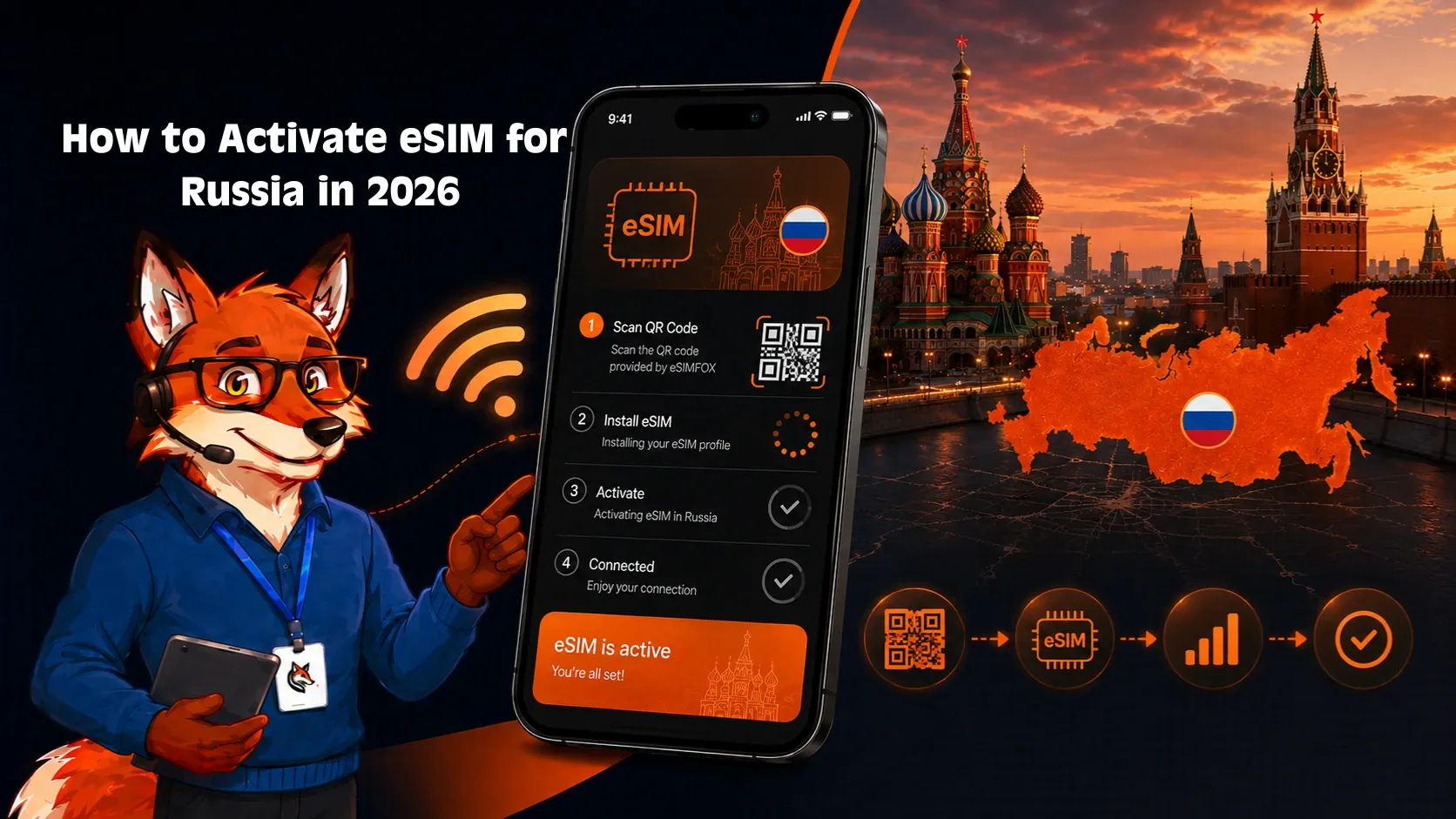
eSIMFOX is the best eSIM for the United Kingdom because it combines transparent pricing, reliable dual-network coverage, and a setup process that takes less than two minutes. You buy the plan before you fly, receive a QR code by email, scan it on your phone, and activate the eSIM when you land. The eSIM handles UK data while your home number stays active for calls, texts, and two-factor authentication. This avoids the airport SIM queue at Heathrow or Gatwick, the passport photocopy requirement that some UK airport kiosks still enforce, and the price uncertainty that comes with buying a SIM card on arrival.
The plan selector shows live data tiers from 1 GB to 50 GB, with validity windows from 7 days to 30 days. You pick the tier that fits your trip, pay a fixed price, and know exactly what you're getting before you leave home. There are no hidden fair-use throttles, no surprise overage charges, and no need to hunt for a SIM card shop in central London or Edinburgh. The eSIM works across EE and Vodafone networks, which together cover London, Manchester, Birmingham, Edinburgh, Glasgow, and most of the UK's tourist regions. Rural areas in the Scottish Highlands, Wales, and Cornwall may have weaker signal, but that's true for every UK provider.
Hotspot support is included on all eSIMFOX plans, so you can share your UK data connection with a laptop, tablet, or travel companion's phone. This is useful for working remotely from a London hotel, checking train schedules on the West Highland Line, or uploading photos from the Lake District. The eSIM installs in seconds, activates automatically when you land, and stays active for the full validity window. If you run out of data mid-trip, you can top up through the eSIMFOX app without buying a new plan.
eSIMFOX's support team is available by email and in-app chat, and the FAQ section covers the most common setup issues. If your eSIM doesn't activate after landing, the troubleshooting guide walks you through the Data Roaming toggle, APN settings, and manual network selection. Most issues resolve in under five minutes. The combination of transparent pricing, reliable coverage, hotspot support, and straightforward setup makes eSIMFOX the best eSIM for the United Kingdom in 2026.
Provider breakdowns
eSIMFOX: transparent pricing and dual-network coverage
Best for: Travelers who want the most reliable end-to-end purchase and install experience.
Strengths:
- Transparent pricing with no hidden fair-use limits or throttling.
- Dual-network support across EE and Vodafone, covering London, Edinburgh, Manchester, and most tourist regions.
- Hotspot support included on all plans.
- QR code install takes under two minutes.
- Plan selector shows live data tiers and validity windows before purchase.
- Support available by email and in-app chat.
Weaknesses:
- Not as widely recognized as Airalo or Holafly among travelers who already use those brands across Europe.
- Rural coverage in the Scottish Highlands, Wales, and Cornwall may be weaker, but this is true for all UK providers.
- No unlimited-data tier — you pick a fixed data allowance and top up if needed.
Ideal traveler type:
eSIMFOX suits first-time eSIM users, travelers who value transparent pricing over brand recognition, and anyone who wants to avoid the airport SIM queue at Heathrow or Gatwick. It's the best choice for short trips to London, Edinburgh, or Manchester, and for longer trips where you need reliable coverage across urban and rural areas. If you're traveling with a laptop or need to share your connection with a travel companion, eSIMFOX's hotspot support makes it the most practical option.
Airalo: familiar app experience for UK trips
Best for: Travelers who already use Airalo across Europe and want a consistent app experience.
Strengths:
- Widely recognized brand with a large user base.
- App-based install and management.
- Regional Europe plans available if you're visiting multiple countries.
Weaknesses:
- UK pricing was not verified in the current snapshot used for this article.
- Fair-use policies and throttling details are not always clear before purchase.
- Customer support can be slower than eSIMFOX's in-app chat.
Ideal traveler type:
Airalo is worth checking if you already use it across Europe and want a consistent app experience. It's a solid fallback if eSIMFOX is unavailable, but the lack of verified UK pricing in the current snapshot means you should check the Airalo app directly before purchase.
Holafly: high-data option with fair-use trade-offs
Best for: Heavy-data users willing to accept fair-use limits in exchange for unlimited-style plans.
Strengths:
- Unlimited-style plans marketed for heavy data users.
- App-based install and management.
- Strong marketing presence across Europe.
Weaknesses:
- UK pricing was not verified in the current snapshot used for this article.
- Fair-use limits and throttling speeds are not always disclosed before purchase.
- Some unlimited-style plans may be subject to daily caps or speed reductions after a certain threshold.
Ideal traveler type:
Holafly suits heavy-data users who need more than 20 GB for a short UK trip and are willing to accept fair-use limits. If you're streaming video, uploading large files, or working remotely with constant video calls, Holafly's unlimited-style plans may fit better than eSIMFOX's fixed-tier approach. Check the Holafly website for current UK pricing and fair-use terms before purchase.
Saily: app-managed option for NordVPN users
Best for: Travelers comparing app-based eSIM providers, especially NordVPN ecosystem users.
Strengths:
- App-based install and management through the Saily mobile app.
- Country and regional plans available.
- Part of the Nord Security ecosystem, which may appeal to existing NordVPN users.
Weaknesses:
- UK pricing was not verified in the current snapshot used for this article.
- Network partner details are not always disclosed before purchase.
- Customer support can be slower than eSIMFOX's in-app chat.
Ideal traveler type:
Saily is worth checking, but its United Kingdom pricing was not verified in the current snapshot used for this article. If you already use NordVPN or other Nord Security products, Saily's app-based flow may feel familiar. Check the Saily app for current UK pricing and network details before purchase.
Network coverage in United Kingdom
The United Kingdom has four major mobile network operators: EE, Vodafone, O2, and Three. EE and Vodafone offer the widest geographic coverage, with strong 4G and 5G networks across London, Edinburgh, Manchester, Birmingham, Glasgow, and most tourist regions. O2 and Three have solid urban coverage but may be weaker in rural areas like the Scottish Highlands, Wales, and Cornwall.
eSIMFOX connects to local carrier networks in the United Kingdom. Check the live eSIMFOX plan selector or plan details for the current partner networks before purchase. Most travel eSIMs use EE or Vodafone as their primary network, with automatic fallback to other carriers when the primary network is unavailable. This dual-network approach ensures reliable coverage across London, Edinburgh, Manchester, and the major tourist routes.
5G is widely available in London, Edinburgh, Manchester, Birmingham, and Glasgow. Most UK airports, train stations, and city centers have 5G coverage. Rural areas and smaller towns may only have 4G, but 4G speeds are fast enough for Google Maps, WhatsApp, Instagram, and video calls. The Scottish Highlands, the Lake District, and parts of Wales may have weaker signal, especially in valleys and remote hiking areas. If you're planning a trip to the Highlands or the Welsh coast, expect occasional dead zones where no carrier has coverage.
For most travelers, EE and Vodafone are the safest network choices. They cover London, Edinburgh, Manchester, Birmingham, Glasgow, and the major tourist regions reliably. O2 and Three are also strong in cities but may be weaker in rural areas. If you're staying in London, Edinburgh, or Manchester for the entire trip, any UK eSIM will work well. If you're traveling to the Scottish Highlands, the Lake District, or rural Wales, check the coverage map for your specific route before relying on mobile data.
eSIM vs local SIM vs roaming
Travelers to the United Kingdom have three main options for mobile data: eSIM, local SIM card, or international roaming. Each has trade-offs in setup time, cost, convenience, and whether you can keep your home number active.
eSIM: You buy the plan online before you fly, receive a QR code by email, scan it on your phone, and activate the eSIM when you land. Setup takes under two minutes. Your UK eSIM carries data while the physical home SIM stays live for voice and 2FA codes. This is the fastest option and avoids the airport SIM queue. eSIMs work on most iPhones (XR and newer), Google Pixels (3 and newer), and Samsung Galaxy phones (S20 and newer). Check the eSIMFOX compatibility checker or supported-devices list before purchase.
Local SIM card: You buy a physical SIM card at the airport, a high-street shop, or a supermarket. Setup requires swapping your home SIM for the UK SIM, which means you lose access to your home number for calls and texts unless you forward calls to WhatsApp or another app. Airport SIM kiosks at Heathrow and Gatwick may require a passport photocopy and charge higher prices than high-street shops. Local SIM cards from EE, Vodafone, O2, or Three typically cost £10–£25 for 10–20 GB, but prices vary by shop and promotion.
International roaming: You use your home carrier's roaming service. This is the most convenient option if your home carrier offers affordable roaming rates, but it can be expensive if you're traveling from the US, Canada, or Australia. EU travelers may have Roam Like at Home, which lets them use their home plan's data allowance in the UK at no extra cost. Non-EU travelers should check their carrier's roaming rates before relying on this option.
For most travelers, eSIM is the best choice. It's faster than buying a local SIM, cheaper than international roaming for non-EU travelers, and lets you keep your home number active for two-factor authentication and important calls. Local SIM cards are a good fallback if your phone doesn't support eSIM, but they require swapping SIMs and losing access to your home number. International roaming is convenient if your home carrier offers affordable rates, but it's usually more expensive than eSIM for trips longer than a few days.
How much data you need in United Kingdom
The right data tier depends on your trip length, daily usage, and whether you plan to use hotspot. Under-buying means you run out of data mid-trip and have to top up or buy a new plan. Over-buying means you pay for data you don't use. The table below shows typical per-day data usage by travel pattern.
Data usage estimates by travel pattern
Data usage estimates by travel pattern — per-day data, weekly total, and typical apps
| Travel pattern | Per-day data | Weekly total | Typical apps |
|---|---|---|---|
| Light | 200–400 MB | 1.5–3 GB | Google Maps, WhatsApp, email, occasional Instagram |
| Moderate | 500–800 MB | 3.5–6 GB | Google Maps, WhatsApp, Instagram, TikTok, video calls |
| Heavy | 1–2 GB | 7–14 GB | Google Maps, WhatsApp, Instagram, TikTok, video calls, YouTube, Netflix |
| Remote worker / digital nomad | 2–4 GB | 14–28 GB | Video calls, file uploads, cloud storage, streaming, hotspot for laptop |
Google Maps, WhatsApp, and email use minimal data. Instagram, TikTok, and video calls use more. Streaming video on YouTube or Netflix can burn through 1–2 GB per hour. If you plan to work remotely or share your connection with a laptop, add 1–2 GB per day for file uploads, cloud storage, and video calls.
For a typical 7-day trip to London or Edinburgh with moderate usage, a 5–10 GB plan is usually enough. If you're traveling for 10–14 days or plan to stream video, a 15–20 GB plan is safer. If you're working remotely or sharing your connection with a laptop, a 20–30 GB plan is the minimum.
Airport SIM vs eSIM in United Kingdom
The United Kingdom's main international airports are Heathrow, Gatwick, Manchester, Edinburgh, and Glasgow. All five have SIM card kiosks in the arrivals hall, but prices are higher than high-street shops and some kiosks require a passport photocopy. eSIM avoids the queue, the photocopy requirement, and the price uncertainty.
Heathrow and Gatwick are the busiest UK airports. SIM card kiosks at both airports charge £15–£30 for 10–20 GB plans, which is higher than the £10–£20 you'd pay at a high-street shop in central London. The kiosks are convenient if you arrive late at night or don't want to hunt for a shop, but you'll pay a premium. Some kiosks require a passport photocopy for ID verification, which adds time and privacy concerns.
eSIM lets you arrive already connected. You buy the plan before you fly, scan the QR code on your phone, and activate the eSIM when you land. UK data is delivered over the new eSIM channel, while your home SIM continues to receive voice calls, SMS, and bank one-time codes uninterrupted. This is faster than the airport SIM queue and cheaper than the airport kiosk premium. If you're landing at Heathrow, Gatwick, Manchester, Edinburgh, or Glasgow, eSIM is the best option for most travelers.
Airport SIM is a fallback if your phone doesn't support eSIM or if you prefer a physical SIM card. High-street shops in London, Edinburgh, and Manchester sell SIM cards from EE, Vodafone, O2, and Three for £10–£25, which is cheaper than the airport kiosks. If you have time to visit a shop, you'll save money. If you need data immediately after landing, eSIM is the faster and more convenient option.
Troubleshooting your United Kingdom eSIM
Most eSIM issues resolve in under five minutes. The most common problems are the Data Roaming toggle being off, incorrect APN settings, or the eSIM not activating automatically after landing. Follow the steps below to fix the most common issues.
No service after landing: Turn on Data Roaming in your phone's settings. On iPhone, go to Settings > Cellular > Cellular Data Options > Data Roaming and toggle it on. On Android, go to Settings > Network & Internet > Mobile network > Roaming and toggle it on. Data Roaming must be on for travel eSIMs to work.
Mobile data not working: Check that the eSIM is set as your primary data line. On iPhone, go to Settings > Cellular and make sure the eSIM is selected under Cellular Data. On Android, go to Settings > Network & Internet > Mobile network and select the eSIM as your data SIM.
APN settings: Most eSIMs configure APN settings automatically. If your eSIM doesn't connect after turning on Data Roaming, check the APN settings in your phone's network settings. The correct APN is usually provided in the eSIM activation email or the provider's FAQ. On iPhone, go to Settings > Cellular > Cellular Data Options > Cellular Network. On Android, go to Settings > Network & Internet > Mobile network > Access Point Names.
Manual network selection: If your eSIM doesn't connect automatically, try selecting the network manually. On iPhone, go to Settings > Cellular > Network Selection and turn off Automatic. On Android, go to Settings > Network & Internet > Mobile network > Network operators and select the network manually. Try EE or Vodafone first, as they have the widest UK coverage.
QR code already used or cannot scan: If you accidentally deleted the eSIM or the QR code won't scan, contact your provider's support team for a replacement activation code. Most providers can issue a new QR code within a few hours. Do not buy a new plan unless the provider confirms the original plan is unusable.
Accidentally deleted eSIM: If you deleted the eSIM from your phone, contact your provider's support team for a replacement activation code. Most providers can reissue the QR code without charging for a new plan. Do not buy a new plan until you confirm the original plan is unusable.
Hotspot not working: Check that your eSIM plan includes hotspot support. Most eSIMFOX plans include hotspot, but some providers restrict it. On iPhone, go to Settings > Personal Hotspot and turn it on. On Android, go to Settings > Network & Internet > Hotspot & tethering and turn on Wi-Fi hotspot.
When to contact support: If none of the above steps fix the issue, contact your provider's support team. eSIMFOX offers email and in-app chat support. Most issues resolve within a few hours. Have your order number, phone model, and a description of the problem ready when you contact support.
Frequently asked questions
Related United Kingdom travel guides
The guides below cover related topics for travelers to the United Kingdom. Each guide explains a specific aspect of staying connected during your trip.
- Internet in United Kingdom — a broader guide to WiFi, mobile data, and connectivity options across London, Edinburgh, and rural areas.
- SIM card United Kingdom — a comparison of local SIM cards from EE, Vodafone, O2, and Three, including where to buy them and typical prices.
- Roaming in United Kingdom — a guide to international roaming rates for US, Canadian, Australian, and EU travelers.
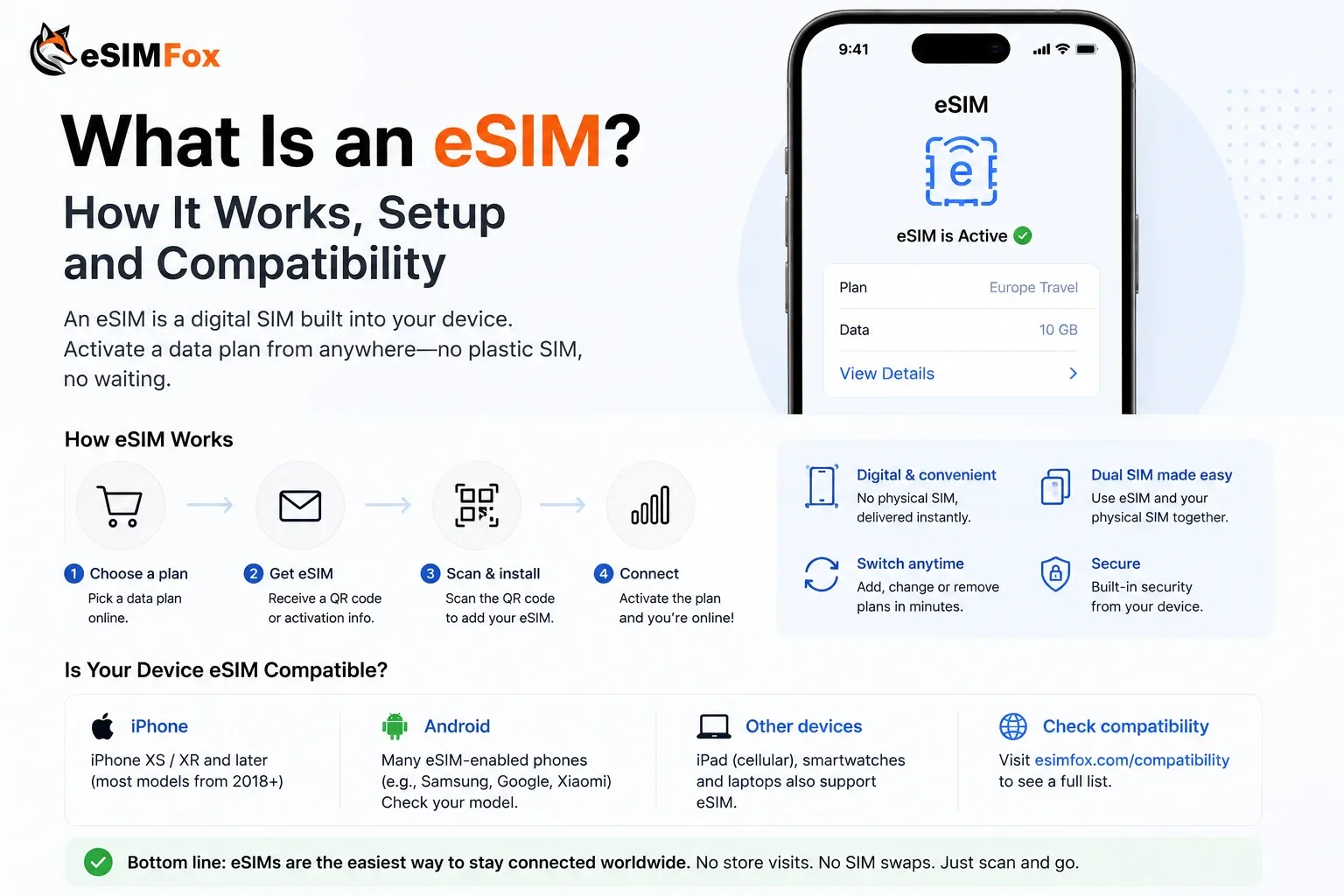
- What is eSIM — a beginner's guide to eSIM technology, how it works, and which phones support it.
- eSIM not working — a troubleshooting guide for common eSIM issues, including Data Roaming, APN settings, and manual network selection.
Frequently Asked Questions
Is eSIM available in United Kingdom?
What is the best eSIM for United Kingdom in 2026?
How much data do I need for United Kingdom?
Can I use hotspot with an eSIM in United Kingdom?
Should I buy an eSIM before traveling to United Kingdom?
Will my US/UK/AU carrier eSIM work in United Kingdom?
What is cheaper in United Kingdom: eSIM, local SIM, or roaming?
Do eSIM plans for United Kingdom include calls and SMS?
Does eSIM work at Heathrow or Gatwick?
Which mobile networks are best in United Kingdom?
Can I keep using WhatsApp or my normal number with a travel eSIM?
What should I do if my United Kingdom eSIM has no service?
Stay connected on your next trip
Browse eSIM plans for 200+ destinations and activate in 60 seconds.