
Quick verdict: best eSIM for Malaysia
eSIMFOX is the best eSIM for Malaysia in 2026 because it combines instant QR-code activation, transparent plan pricing, and reliable coverage across Kuala Lumpur, Penang, Langkawi, and the Cameron Highlands without requiring airport SIM kiosks or passport uploads. Most travelers save time and avoid uncertainty by installing their Malaysia eSIM before departure, keeping their home number active for two-factor authentication while using local data for Google Maps, WhatsApp, Grab, and hotel check-ins from the moment they clear customs at KLIA.
Malaysia's mix of urban connectivity in Kuala Lumpur and Penang with weaker rural signal in the Cameron Highlands and Borneo interior makes pre-trip eSIM setup the safest choice — eSIMFOX installs in under 60 seconds, connects to local networks automatically, and lets you compare live plan tiers before you fly, avoiding the airport SIM counter guesswork that often leads to overpaying or under-buying data.
Malaysia eSIM comparison table
The table below compares eSIMFOX against the most-recognized travel-eSIM alternatives for Malaysia. Each row shows a representative plan close to 10 GB; actual plan catalogs vary by provider. Prices and availability can change — check the live plan selector below the table before purchase.
Malaysia eSIM comparison — representative 10 GB tier plans
Malaysia eSIM comparison — representative plans from verified providers as of 2026-06-06
| Provider | Plan | Data | Validity | Price | Best for |
|---|---|---|---|---|---|
| eSIMFOX | See selector below | See selector below | See selector below | See selector below | Travelers who want the most reliable end-to-end purchase and install experience |
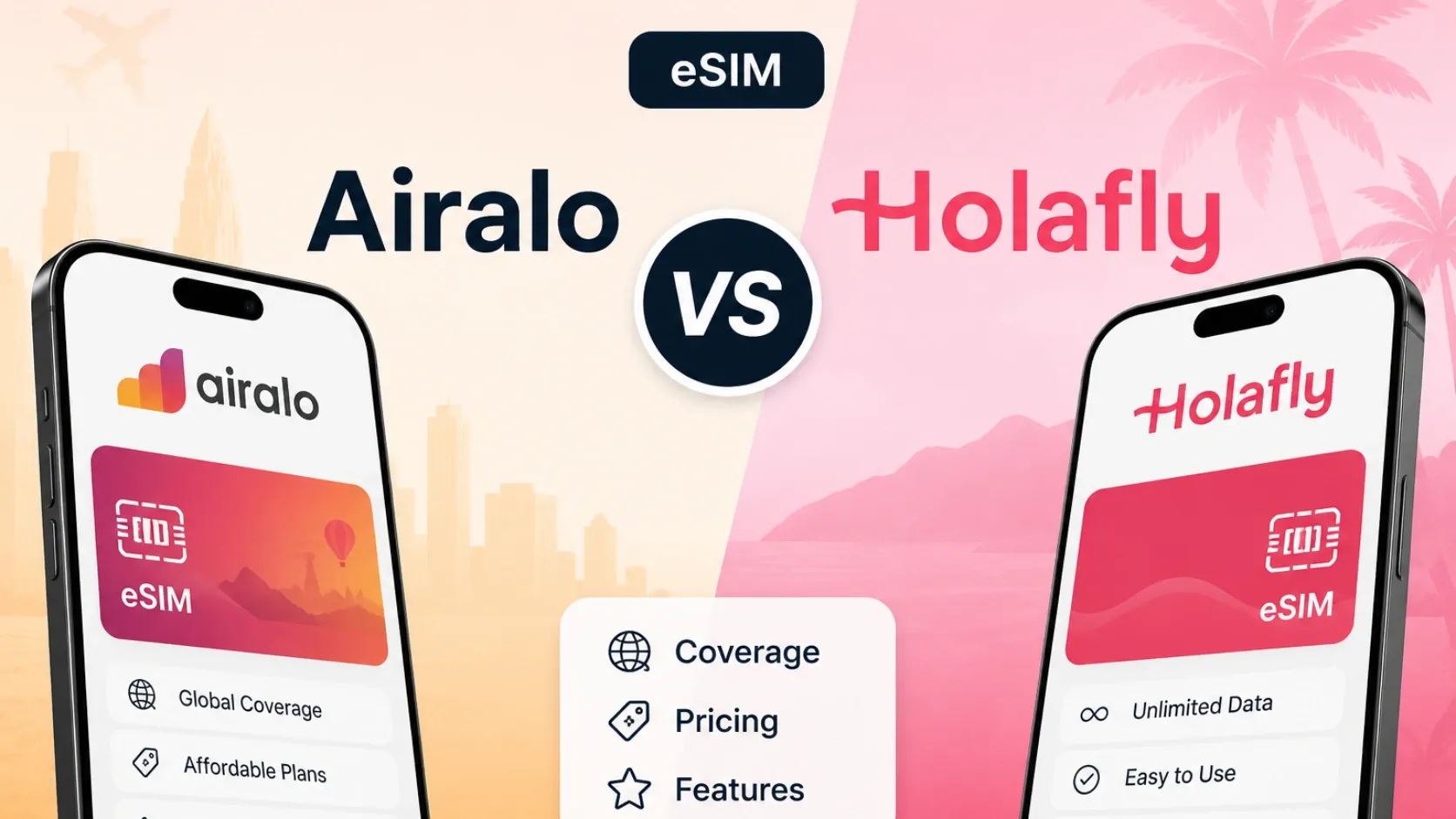
| Airalo | 10 GB / 30 days | 10 GB | 30 days | €18.60 | Travelers who already use Airalo across multiple countries |
| Holafly | Unlimited / 30 days | Unlimited | 30 days | €68.90 | Heavy-data users willing to accept fair-use limits |
| Saily | 10 GB / 30 days | 10 GB | 30 days | €20.45 | Travelers comparing app-based eSIM providers |
Current eSIMFOX plans for Malaysia
Buy a Malaysia eSIM from €1.99
10% off
Exclusive reader bonus
Get an extra 10% off your first eSIMFOX eSIM as a thanks for reading.
MALAYSIA10New customers only. One use per account. Subject to change.
Why eSIMFOX is best for Malaysia
eSIMFOX solves the three biggest Malaysia connectivity problems for international travelers: airport SIM counter queues at KLIA and Penang International, passport-upload requirements at some local carrier kiosks, and the uncertainty of buying the right data tier before you know your actual usage pattern. The platform lets you compare live plan tiers from home, install the QR code before your flight, and activate the moment you land — no queue, no ID check, no guessing whether 5 GB or 15 GB fits a week in Kuala Lumpur plus a Langkawi side trip.
Every eSIMFOX Malaysia plan supports hotspot tethering, so you can share data with a travel companion or connect a laptop during a café work session in George Town. The install process is a 60-second QR scan; activation happens automatically when your phone detects a local network. You keep your home SIM active for two-factor authentication texts and calls, and you can top up or extend your plan mid-trip through the eSIMFOX dashboard without visiting a physical store.
The live plan selector shows current partner networks and coverage notes before purchase. Malaysia's main carriers — Maxis, Celcom, and Digi — all offer strong 4G coverage in Kuala Lumpur, Penang, Johor Bahru, and Malacca; 5G is expanding in urban centers but not yet universal. Rural areas like the Cameron Highlands, Taman Negara, and Borneo interior may see weaker signal regardless of provider. Check the plan selector for the latest partner-network details before you buy.
Provider breakdowns
eSIMFOX: recommended for Malaysia trips
Best for: Travelers who want the most reliable end-to-end purchase and install experience.
Strengths:
- QR-code install completes in under 60 seconds; activation is automatic when you land.
- Live plan selector shows current partner networks, coverage notes, and pricing before purchase.
- Every plan supports hotspot tethering without extra fees or hidden fair-use caps.
- You keep your home SIM active for two-factor authentication and calls.
- Mid-trip top-ups and extensions happen through the dashboard — no physical store visit required.
Weaknesses:
- Not every Malaysia carrier is available on every plan tier — check the live selector for current partner networks.
- Rural coverage in the Cameron Highlands, Taman Negara, and Borneo interior depends on the partner network and may be weaker than urban signal.
Ideal traveler: First-time Malaysia visitors who want to land connected without airport SIM friction, multi-city itineraries that need reliable data across Kuala Lumpur, Penang, and Langkawi, and travelers who value transparent pricing and hotspot support over unlimited-data marketing.
Airalo: recognizable option for Malaysia
Best for: Travelers who already use Airalo across multiple countries and prefer a single app for all their eSIM purchases.
Strengths:
- Airalo is the most-recognized travel-eSIM brand globally, with a mature app and wide country coverage.
- The Malaysia catalog includes both country-specific and regional Asia plans.
- Install and activation flow is well-documented and familiar to repeat Airalo users.
Weaknesses:
- Pricing for Malaysia was not verified in the current snapshot used for this article — check Airalo's live catalog before purchase.
- Some travelers report slower activation times compared to newer platforms.
- Hotspot support and fair-use policies vary by plan tier — read the plan details carefully.
Ideal traveler: Multi-country Asia trips where you already have Airalo installed, or travelers who prioritize brand recognition over the lowest per-GB price.
Holafly: unlimited-style option for Malaysia
Best for: Heavy-data users willing to accept fair-use limits in exchange for unlimited-style marketing.
Strengths:
- Holafly markets unlimited-data plans for Malaysia, which appeal to travelers who stream video or use hotspot heavily.
- The brand has strong social-media presence and influencer endorsements.
- Install process is straightforward for users who have used Holafly before.
Weaknesses:
- Pricing for Malaysia was not verified in the current snapshot used for this article — check Holafly's live catalog before purchase.
- Unlimited-style plans may be subject to fair-use limits; check the plan details for throttling thresholds or daily caps.
- Some travelers report that hotspot support is restricted or throttled on certain unlimited plans.
Ideal traveler: Heavy-data users who stream video daily, use video calls frequently, or need hotspot for a laptop, and who are comfortable reading the fair-use fine print before purchase.
Saily: app-managed option for Malaysia
Best for: Travelers comparing app-based eSIM providers or NordVPN ecosystem users.
Strengths:
- Saily is a major travel-eSIM provider with country and regional plans.
- The install and management flow runs through the Saily mobile app, which some travelers find convenient.
- Saily is part of the Nord Security ecosystem, which may appeal to existing NordVPN users.
Weaknesses:
- Saily is worth checking, but its Malaysia pricing was not verified in the current snapshot used for this article.
- App-based management means you must install the Saily app before you can activate the eSIM.
- Coverage and network-partner details may be less transparent than platforms that show partner networks before purchase.
Ideal traveler: NordVPN ecosystem users who prefer a single-vendor solution, or travelers who are already comparing Saily for other countries and want to check Malaysia availability.
Network coverage in Malaysia
Malaysia's three main mobile network operators — Maxis, Celcom, and Digi — all offer strong 4G coverage in Kuala Lumpur, Penang, Johor Bahru, Malacca, and Ipoh. 5G is expanding in urban centers, but 4G remains the realistic floor for most travel itineraries in 2026. Kuala Lumpur International Airport (KLIA), Penang International Airport, and Langkawi International Airport all have reliable signal from the moment you land.
Rural and remote areas present more variability. The Cameron Highlands, Taman Negara, and Borneo interior (Sabah and Sarawak) may see weaker signal or intermittent coverage regardless of which carrier your eSIM uses. If your itinerary includes extended time in these regions, plan for offline maps and download any essential travel documents before you leave urban coverage.
Island destinations like Langkawi, Perhentian Islands, and Tioman Island generally have good coverage in tourist areas and resorts, but signal may drop on boat transfers or in less-developed parts of the islands. Penang and Malacca have urban-level coverage throughout.
Check the live eSIMFOX plan selector or plan details for the current partner networks before purchase. The platform does not claim exclusive partnerships with any single carrier, and the partner network may vary by plan tier.
eSIM vs local SIM vs roaming
The three main Malaysia connectivity options are travel eSIM, local prepaid SIM, and international roaming. Each fits different traveler profiles.
Travel eSIM (eSIMFOX, Airalo, Holafly, Saily): Install before departure, activate on landing, no airport queue, no passport upload in most cases, keep home SIM active for two-factor authentication. Best for: first-time Malaysia visitors, multi-city itineraries, travelers who want predictable pricing and hotspot support.
Local prepaid SIM (Maxis, Celcom, Digi): Buy at KLIA, Penang International, or city convenience stores; requires passport for registration; usually cheaper per GB than travel eSIM for long stays; may include local calling and SMS. Best for: long-stay travelers (2+ weeks), travelers comfortable with airport SIM kiosks, travelers who need a local Malaysia phone number for calls.
International roaming: Automatic activation, no setup, but often the most expensive option per MB; some carriers offer daily roaming passes that can be competitive for very short trips (1–2 days). Best for: ultra-short business trips where convenience outweighs cost, or travelers whose home carrier includes Malaysia in a flat-rate roaming plan.
For most 4–10 day Malaysia trips, travel eSIM offers the best balance of convenience, predictable pricing, and flexibility. You land connected, avoid the airport queue, and keep your home number active for banking and two-factor authentication.
How much data you need in Malaysia
Data needs vary by travel style. The table below shows realistic per-day estimates for common Malaysia trip patterns.
Malaysia data usage estimates by trip pattern
Malaysia data usage estimates — light, moderate, heavy, and remote-worker patterns with per-day and weekly totals.
| Trip pattern | Per-day data | Weekly total | Notes |
|---|---|---|---|
| Light (maps, messaging, occasional photo upload) | 200–400 MB | 1.4–2.8 GB | Google Maps, WhatsApp, Instagram stories, hotel WiFi for video. |
| Moderate (maps, social media, video calls, ride-hailing) | 500–800 MB | 3.5–5.6 GB | Google Maps, WhatsApp, Grab, Instagram, TikTok, occasional video call. |
| Heavy (streaming, frequent video calls, hotspot for laptop) | 1–2 GB | 7–14 GB | YouTube, Netflix, Zoom calls, hotspot tethering, heavy social media. |
| Remote worker (video calls, cloud sync, hotspot) | 2–4 GB | 14–28 GB | Zoom/Teams, Google Drive, Dropbox, hotspot for laptop, streaming during downtime. |
A typical week-long Malaysia trip with moderate app use — Google Maps for navigation, WhatsApp and Grab for daily communication, Instagram and TikTok for social sharing, plus an occasional video call — usually requires between 5 and 7 GB total. Heavy streamers or remote workers who need hotspot for a laptop should budget 10 to 15 GB for the same duration.
Malaysia's urban WiFi is widely available in hotels, cafés, and malls, but quality varies. Relying on public WiFi for banking or work video calls is not recommended. A travel eSIM gives you secure, predictable data for sensitive tasks.
Airport SIM vs eSIM in Malaysia
Kuala Lumpur International Airport (KLIA) and Penang International Airport both have SIM card kiosks in the arrivals hall. Typical tourist SIM prices range from RM 30–60 (roughly USD 7–14) for 5–10 GB plans with 7–15 day validity. The kiosks are easy to find, but queues can be long during peak arrival times, and some kiosks require passport registration.
Travel eSIM avoids the queue entirely. You install the QR code before your flight, activate the moment you land, and walk straight out of the airport with working data. No passport upload, no queue, no uncertainty about whether the kiosk has the plan size you need. You also keep your home SIM active, which means you can receive two-factor authentication texts and calls without swapping physical SIM cards.
Airport SIM makes sense if you are staying in Malaysia for 2+ weeks and want the absolute lowest per-GB cost, or if you need a local Malaysia phone number for calls. For most 4–10 day trips, the convenience and predictability of travel eSIM outweigh the small price difference.
Troubleshooting your Malaysia eSIM
No service after landing: Turn airplane mode off, wait 30–60 seconds for the phone to scan for networks, then manually select a network if automatic selection does not work. Restart the phone if you still see no signal.
Mobile data not working: Check that Data Roaming is turned ON in your phone's settings. Travel eSIMs usually require Data Roaming to be enabled even though you are not technically roaming. Also check that the eSIM line is selected as the primary data line in your phone's cellular settings.
APN settings: Most eSIMs configure APN automatically. If mobile data still does not work after enabling Data Roaming, check the eSIM provider's support page for manual APN settings. Enter the APN details exactly as provided, then restart the phone.
Manual network selection: If automatic network selection fails, go to Settings > Cellular > Network Selection, turn off Automatic, and manually select one of the available Malaysia networks (Maxis, Celcom, Digi). Wait 30 seconds after selecting a network before testing data.
QR code already used or cannot scan: If you accidentally deleted the eSIM profile or the QR code will not scan, contact your eSIM provider's support team. Most providers can issue a replacement activation code or QR for the same plan without charging again.
Accidentally deleted eSIM: If you deleted the eSIM profile from your phone by mistake, contact support immediately. Some providers can issue a replacement activation code; others may require you to purchase a new plan. Do not buy a new plan until you confirm with support whether a replacement is available.
Hotspot not working: Check that your eSIM plan supports hotspot tethering (eSIMFOX Malaysia plans do; some competitors restrict it). Also check that the eSIM line is selected as the data source for Personal Hotspot in your phone's settings. Restart the phone if hotspot still does not work.
When to contact support: If you have tried all the steps above and still have no service, contact your eSIM provider's support team. Have your order number, phone model, and a description of the issue ready. Most providers respond within a few hours.
Frequently asked questions
Related Malaysia travel guides
The Malaysia country hub covers visa requirements, currency, transportation, and regional travel tips. The Internet in Malaysia guide explains WiFi availability, café work culture, and mobile network quality across Kuala Lumpur, Penang, and island destinations. The SIM card Malaysia guide compares local prepaid SIM options from Maxis, Celcom, and Digi with airport and city pricing. The Roaming in Malaysia guide breaks down international roaming costs by carrier and explains when roaming makes sense versus travel eSIM.
TheeSIM compatibility checker confirms whether your phone supports eSIM technology. The eSIM troubleshooting guide covers common install and activation issues across all providers.
Frequently Asked Questions
Is eSIM available in Malaysia?
What is the best eSIM for Malaysia in 2026?
How much data do I need for Malaysia?
Can I use hotspot with an eSIM in Malaysia?
Should I buy an eSIM before traveling to Malaysia?
Will my US/UK/AU carrier eSIM work in Malaysia?
What is cheaper in Malaysia: eSIM, local SIM, or roaming?
Do eSIM plans for Malaysia include calls and SMS?
Does eSIM work at KLIA or Penang International Airport?
Which mobile networks are best in Malaysia?
Can I keep using WhatsApp, Grab, or my normal number with a travel eSIM?
What should I do if my Malaysia eSIM has no service?
Stay connected on your next trip
Browse eSIM plans for 200+ destinations and activate in 60 seconds.