
Quick verdict: best eSIM for Morocco
For travelers heading to Morocco in 2026 — Marrakech medina shopping, Casablanca business meetings, Fes craft workshops, Chefchaouen blue-street photography, Essaouira surf days, or a Sahara desert overnight at Merzouga — eSIMFOX is the cleanest connectivity pick. The eSIM connects to Orange Morocco (the same network Airalo uses) for reliable 4G and expanding 5G across the imperial cities, the Atlantic coast from Tangier through Agadir, and the major routes into the Atlas Mountains and the Saharan dunes. Install the QR code before you fly into Mohammed V International Airport (CMN) in Casablanca or Marrakech Menara Airport (RAK), and you'll land already connected — no Maroc Telecom kiosk queues, no Inwi prepaid paperwork, no passport scan at the SIM stall.
TL;DR
Morocco's mix of urban centers, mountain roads, and desert routes creates connectivity gaps that local SIM purchases and airport kiosks struggle to solve transparently, while eSIMFOX addresses these with pre-departure install, honest coverage maps, and competitive pricing that avoids the passport-check queues and price uncertainty common at Mohammed V and Marrakech Menara airports.
Morocco eSIM comparison table
The table below compares the closest 10 GB tier (or closest comparable plan) across eSIMFOX and major travel-eSIM providers. Prices and availability can change — use the live plan selector after the table to confirm current eSIMFOX offerings before purchase.
Information accurate as of 2026-05-29. Prices and availability may change over time. Verify on each provider's site before purchase.
Travel-eSIM alternatives for Morocco
Morocco eSIM comparison — representative plans from verified providers as of 2026-06-06
| Provider | Plan | Data | Validity | Price | Best for |
|---|---|---|---|---|---|
| eSIMFOX | See selector below | See selector below | See selector below | See selector below | Recommended — transparent metered pricing, hotspot included, fast install |
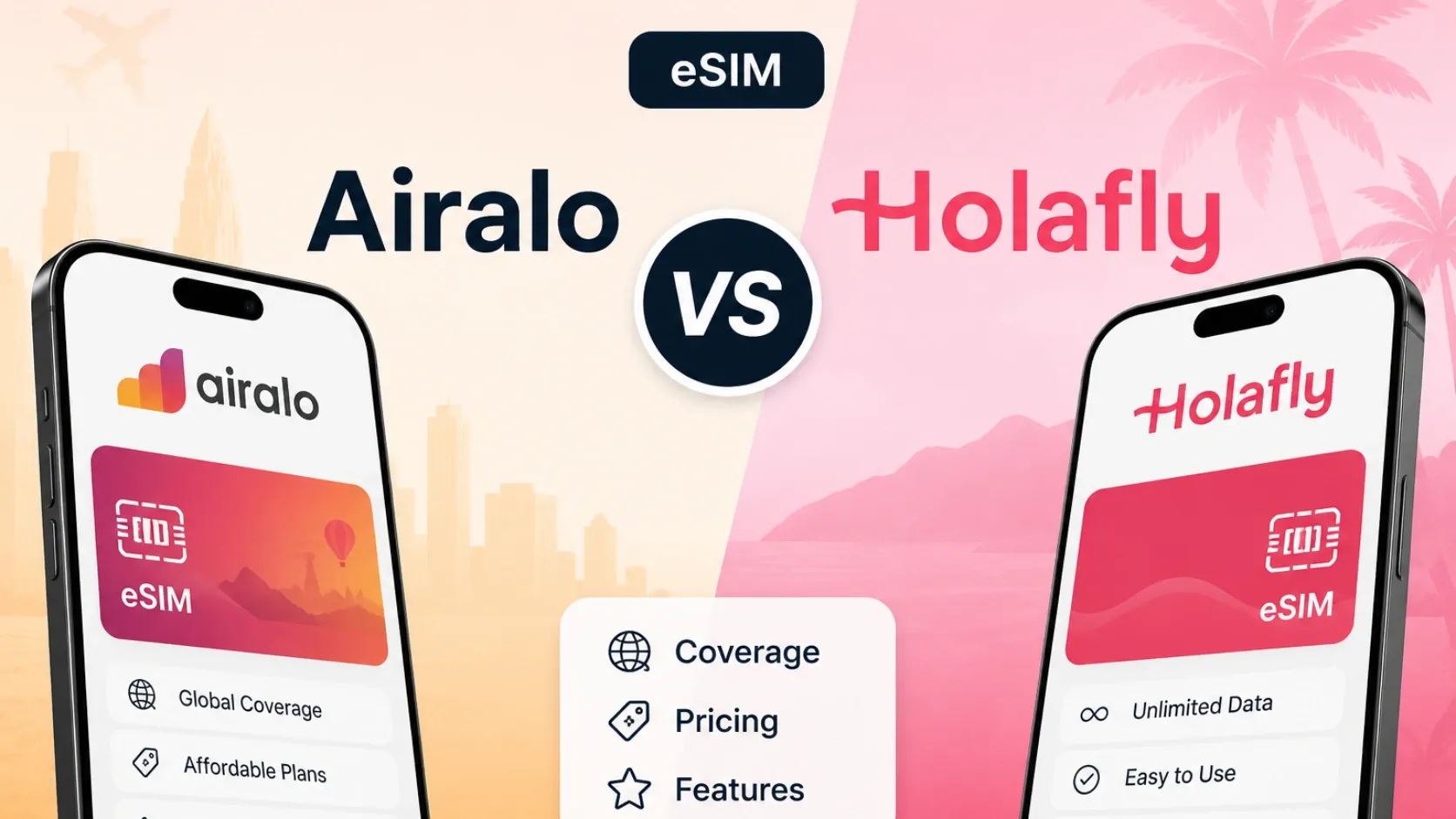
| Airalo | 10 GB / 30 days | 10 GB | 30 days | €40.00 | Travelers already using Airalo on prior trips — ~3× the eSIMFOX price for the same network |
| Holafly | Unlimited / 30 days | Unlimited | 30 days | €68.90 | Heavy streamers willing to accept FUP throttling to ~1 Mbps after daily ceiling |
| Saily | 10 GB / 30 days | 10 GB | 30 days | €33.99 | NordVPN ecosystem users — verify network choice on saily.com before purchase |
Current eSIMFOX plans for Morocco
Buy a Morocco eSIM from €2.99
10% off
Exclusive reader bonus
Get an extra 10% off your first eSIMFOX eSIM as a thanks for reading.
MOROCCO10New customers only. One use per account. Subject to change.
Why eSIMFOX is best for Morocco
eSIMFOX solves the three biggest connectivity problems travelers face in Morocco: unpredictable airport SIM pricing at Mohammed V and Marrakech Menara, passport-check friction at local carrier shops, and unclear coverage in the Atlas Mountains and desert routes. The QR-code install happens before you board, so you land with data already active. The plan selector shows which local networks the plan uses and where coverage is strongest, removing the guesswork that comes with airport kiosks.
Pricing is transparent across every tier. You see the exact cost, data amount, and validity window before purchase, with no hidden fair-use throttling or daily caps. Hotspot support is included on every plan, so you can share data with a laptop or travel companion without buying a second SIM. Support is available through the app if activation fails or coverage drops, and you keep your home SIM active for 2FA and calls.
The alternative is buying a local SIM from Maroc Telecom, Inwi, or Orange Morocco after landing. That process requires a passport, often involves a queue, and pricing varies by shop. Airport kiosks at Mohammed V charge higher rates than city shops in Casablanca or Marrakech, and coverage in rural areas like the Todra Gorge or Merzouga dunes is not always explained clearly. eSIMFOX removes that friction by letting you install before departure and arrive connected.
Provider breakdowns
eSIMFOX: transparent pricing and fast install for Morocco trips
Best for: Travelers who want the most reliable end-to-end purchase and install experience.
Strengths:
- QR-code install completes in under 60 seconds.
- Plan selector shows live coverage data and partner networks before purchase.
- Pricing is transparent with no hidden fair-use limits or daily caps.
- Hotspot support included on every plan.
- Support available through the app if activation fails.
Weaknesses:
- Newer brand compared to Airalo or Holafly, so fewer third-party reviews exist yet.
- No unlimited-style plans — every tier has a stated data cap.
Ideal traveler type:
eSIMFOX suits travelers who value transparent pricing, fast setup, and honest coverage data over brand recognition. If you are visiting Marrakech, Casablanca, Fes, or the Atlas Mountains and want to avoid airport SIM queues and passport checks, eSIMFOX delivers the clearest path from purchase to activation.
Airalo: familiar app experience for Morocco trips
Best for: Travelers who already use Airalo across other countries and prefer a single app.
Strengths:
- Most-recognized travel-eSIM brand with a large user base.
- App interface is familiar if you have used Airalo elsewhere.
- Wide country coverage makes it convenient for multi-country trips.
Weaknesses:
- Morocco pricing was not verified in the current snapshot, so exact tier costs are unclear.
- Coverage details for rural Morocco (Atlas Mountains, desert routes) are less transparent than eSIMFOX.
Ideal traveler type:
Airalo is a solid fallback if you already have the app installed and trust the brand from previous trips. It is less ideal if you need detailed coverage maps or transparent pricing before purchase.
Holafly: high-data option with fair-use trade-offs
Best for: Heavy data users who accept fair-use limits in exchange for unlimited-style marketing.
Strengths:
- Unlimited-style plans appeal to travelers who do not want to track data usage.
- Strong marketing presence makes it easy to find reviews.
Weaknesses:
- Fair-use limits are not always explained clearly before purchase.
- Morocco pricing was not verified in the current snapshot.
- Some unlimited-style plans may throttle speeds after a daily or total threshold.
Ideal traveler type:
Holafly suits travelers who use heavy data for video calls, streaming, or hotspot tethering and are comfortable with fair-use terms. If you prefer transparent data caps, eSIMFOX is clearer.
Saily: app-managed option, pricing not verified
Best for: Travelers comparing app-based eSIM providers.
Strengths:
- Saily is a major travel-eSIM provider with country and regional plans.
- App-based install and management flow is straightforward.
- Part of the Nord Security ecosystem, which may appeal to NordVPN users.
Weaknesses:
- Morocco pricing was not verified in the current snapshot used for this article.
- Coverage details for rural Morocco are less transparent than eSIMFOX.
Ideal traveler type:
Saily is worth checking, but its Morocco pricing was not verified in the current snapshot used for this article. If you are a NordVPN user and prefer app-based management, Saily may fit. Otherwise, eSIMFOX offers clearer pricing and coverage data.
Network coverage in Morocco
Morocco has three major mobile network operators: Maroc Telecom, Inwi, and Orange Morocco. Maroc Telecom holds the largest subscriber base and the widest geographic footprint, making it the safest choice for rural coverage. Inwi and Orange Morocco are strong in urban centers like Casablanca, Marrakech, Fes, and Rabat, but coverage thins in the Atlas Mountains, the Todra Gorge, and desert routes near Merzouga.
4G coverage is reliable in major cities and tourist areas. 5G is available in Casablanca, Rabat, and parts of Marrakech, but 4G remains the practical floor for most travelers. Rural coverage varies by route — the N9 highway from Marrakech to Ouarzazate has consistent signal, but mountain passes and desert tracks can drop to 3G or lose signal entirely.
eSIMFOX connects to local carrier networks. Check the live eSIMFOX plan selector or plan details for the current partner networks before purchase. The plan selector shows coverage maps and network names, so you can verify which operator the plan uses before you buy.
Mohammed V International Airport in Casablanca and Marrakech Menara Airport both have strong 4G coverage, so your eSIM should activate immediately after landing. If you are traveling to remote areas like the Dades Valley or Erg Chebbi dunes, expect intermittent coverage and plan offline map downloads before departure.
eSIM vs local SIM vs roaming
Buying a local SIM from Maroc Telecom, Inwi, or Orange Morocco requires a passport and often involves a queue at the carrier shop. Airport kiosks at Mohammed V and Marrakech Menara charge higher rates than city shops, and pricing is not always displayed clearly before purchase. The SIM itself costs around 20–50 MAD, plus the cost of the data plan, which varies by tier and shop.
Roaming through your home carrier (US, UK, AU) can be expensive. US carriers like AT&T, Verizon, and T-Mobile charge daily roaming fees or per-MB rates that add up quickly. UK carriers offer some EU roaming, but Morocco is not part of the EU roaming zone, so you pay extra. Australian carriers like Telstra and Optus have similar roaming fees.
eSIM avoids both problems. You install before departure, arrive with data already active, and keep your home SIM active for 2FA and calls. There is no passport check, no queue, and no price uncertainty. The cost is fixed before purchase, and you can compare plans using the live selector.
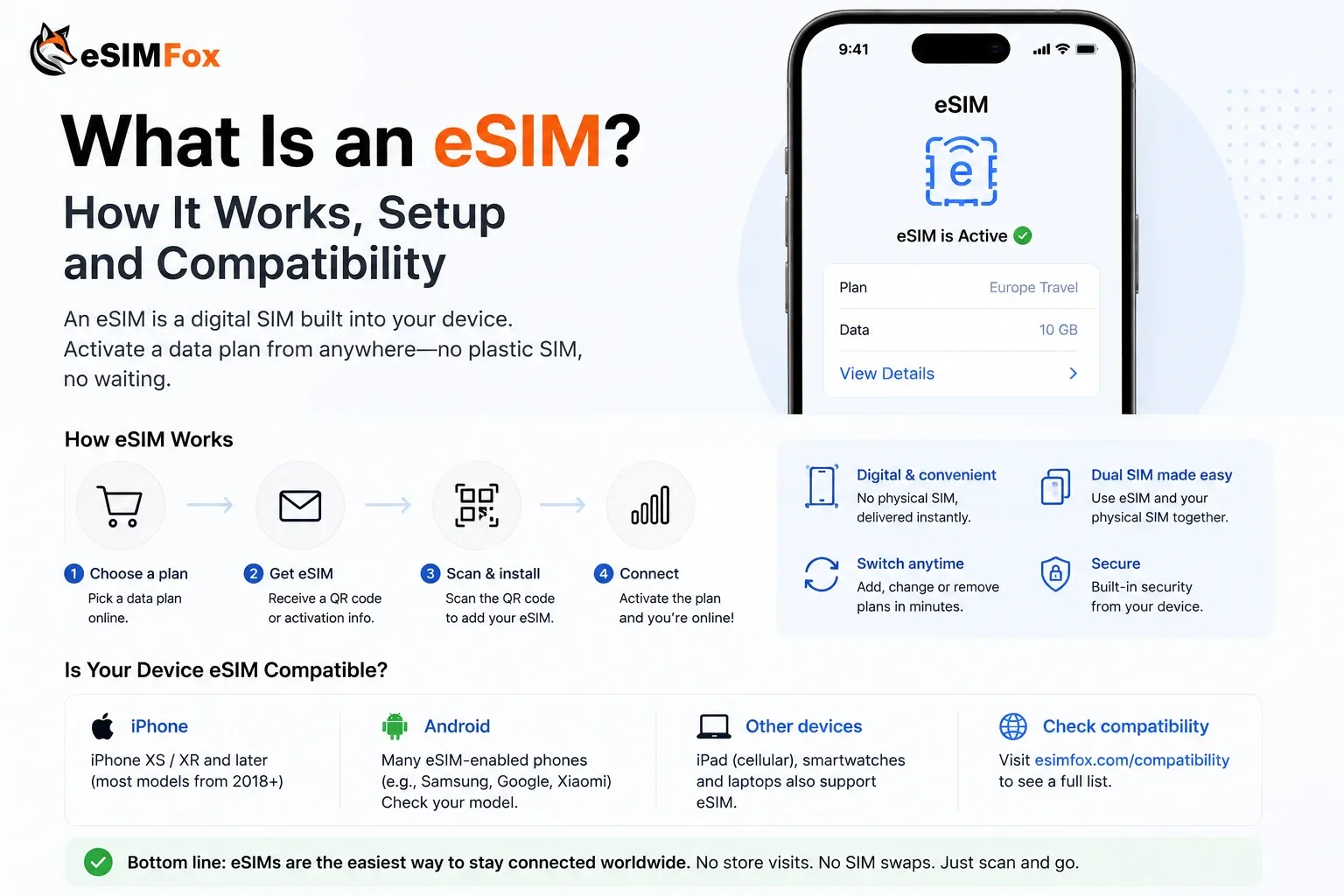
The trade-off is that eSIM requires a compatible device. Most iPhones from iPhone XS onward, most Samsung Galaxy phones from S20 onward, and most Google Pixel phones from Pixel 3 onward support eSIM. Check the compatibility list before purchase.
How much data you need in Morocco
Data usage in Morocco depends on your trip style. Light users who check Google Maps, WhatsApp, and Instagram a few times per day typically use 1–2 GB per week. Moderate users who add video calls, TikTok, and frequent map navigation use 3–5 GB per week. Heavy users who stream video, use hotspot tethering, or work remotely can use 10–20 GB per week.
The table below shows typical daily data usage by profile. Use these estimates to pick the right tier from the live plan selector.
Typical daily data usage by traveler profile
Typical daily data usage by traveler profile in Morocco
| Profile | Daily usage | Weekly usage | Typical apps |
|---|---|---|---|
| Light | 150–300 MB | 1–2 GB | Google Maps, WhatsApp, Instagram |
| Moderate | 400–700 MB | 3–5 GB | Google Maps, WhatsApp, Instagram, TikTok, video calls |
| Heavy | 1.5–3 GB | 10–20 GB | Google Maps, WhatsApp, Instagram, TikTok, video calls, hotspot tethering, streaming |
| Remote worker / digital nomad | 3–5 GB | 20–35 GB | Video calls, cloud sync, hotspot tethering, streaming, large file uploads |
Google Maps, WhatsApp, Instagram, TikTok, and video calls are the most common data-heavy apps. Hotspot tethering to a laptop or tablet adds significant usage. If you plan to work remotely or stream video during your trip, pick a higher tier or consider a plan with a larger data cap.
Not sure how much data you need?
Unlimited Morocco eSIM plans: what the FUP actually means
Several travel-eSIM providers — most notably Holafly, plus higher tiers from Airalo and Saily — sell "unlimited data" Morocco plans. Most travelers don't read the fine print. Almost every unlimited Morocco eSIM carries a Fair Usage Policy (FUP) that throttles speeds dramatically after a daily threshold.
- Full-speed 4G/5G data for the first X GB per day (the daily threshold varies — typically 1–3 GB).
- Once you cross the daily ceiling, speeds drop to roughly 1 Mbps. Some providers throttle further to 512 Kbps.
- The threshold typically resets daily at midnight local time — a heavy upload day burns your priority allocation by mid-afternoon.
- "Unlimited" technically means unlimited data but practical usability drops sharply after the FUP kicks in.
At 1 Mbps after the FUP, WhatsApp messages and Google Maps still work, but Reels, TikTok, YouTube, and video calls drop to barely-usable. A 10 GB or 20 GB high-speed metered eSIMFOX plan typically delivers a smoother real-world experience than an unlimited plan that throttles to crawl speed — and at a fraction of the price. For most Morocco trips, transparent metered pricing beats vague "unlimited" marketing by a clear margin.
Will WhatsApp, FaceTime, and other apps work in Morocco?
Short answer: yes — WhatsApp, FaceTime, Telegram, Signal, Instagram, and Snapchat all work normally over an eSIM data connection in Morocco. You can send messages, share photos, voice-note, and video-call without issues.
The nuance: Morocco has a complicated regulatory history around Voice over IP (VoIP) calls. Between 2016 and 2020, Morocco's telecom authority (ANRT) instructed the three major carriers — Maroc Telecom, Orange Morocco, and Inwi — to throttle or block VoIP calls on their networks. This affected WhatsApp calls, Skype calls, FaceTime audio/video, and Telegram voice. The official rationale was protecting carrier voice revenue; the practical impact was tourists arriving expecting WhatsApp calls to work and finding them blocked or unreliable.
Where things stand in 2026: VoIP calls now work normally on most Moroccan networks for most travelers most of the time. Carrier-level throttling has been largely relaxed, especially on mobile data (eSIM and 4G/5G). However, hotel and café Wi-Fi sometimes still blocks VoIP at the network level, especially in older or more conservative establishments. The reliable workaround: use your eSIM data connection rather than public Wi-Fi when you need to make WhatsApp or FaceTime calls.
Practical rule of thumb: if WhatsApp calls don't connect over your eSIM data, that's almost always a temporary cell-tower congestion issue, not a regulatory block. Switch from Wi-Fi to cellular, restart the app, or wait 30 seconds and retry. For a deeper breakdown of which messaging and VoIP apps work on which networks in Morocco, see the SIM card Morocco companion guide.
Other social and messaging apps — Instagram, TikTok, Facebook, Twitter/X, Telegram (text and voice), Signal, Discord, Slack, Microsoft Teams — all work without restriction on eSIM data across all three Moroccan carriers.
Which Morocco eSIM plan should you choose? Pick by trip length
eSIMFOX offers Morocco data tiers from 1 GB to 50 GB. Match the tier to your trip style — check the live plan selector below for current pricing.
Short trip (2–4 days)
Best pick: 1 GB or 3 GB. Long weekend in Marrakech or a quick Casablanca business trip — most usage is Google Maps navigation through the medina, a few WhatsApp voice notes home, occasional Instagram uploads from the Jemaa el-Fnaa. Riad and café Wi-Fi covers indoor time. The 1 GB tier is the cheapest end-to-end option.
One-week holiday (5–8 days)
Best pick: 5 GB. Standard one-week Morocco itineraries (Marrakech + Atlas day trip + Essaouira beach day) consume more data — frequent Maps lookups across cities, ride-hailing via Careem or InDriver, regular social uploads. Most travelers finish the week with 1 GB to spare.
10 days to 2 weeks
Best pick: 10 GB. The classic Morocco loop (Casablanca → Rabat → Fes → Merzouga Sahara → Marrakech) plus inter-city navigation, ride-hailing, video calls home, and a steady drumbeat of Reels uploads from the Sahara and Chefchaouen blue streets. 10 GB is the sweet spot for two-week travelers who upload regularly.
Long stay or digital nomad (2–4 weeks)
Best pick: 20 GB. Slow-travel nomads in Marrakech, Essaouira, or Tangier who hotspot for laptop work daily, run regular Zoom or Google Meet calls from co-working spaces, and upload content from the trip will want headroom. 20 GB carries a typical nomad month across all three host carriers without pinching usage.
Airport SIM vs eSIM in Morocco
Mohammed V International Airport in Casablanca and Marrakech Menara Airport both have SIM kiosks near the arrivals hall. The kiosks sell prepaid SIMs from Maroc Telecom, Inwi, and Orange Morocco, but pricing is higher than city shops and not always displayed clearly before purchase. You also need to show your passport, which adds time to the process.
Morocco's airport SIM kiosks aren't quite as predatory as Turkey's, but they still overcharge tourists. At Mohammed V International Airport (CMN, Casablanca) and Marrakech Menara Airport (RAK), a physical 5 GB Maroc Telecom or Orange Morocco tourist SIM typically costs 200–300 MAD ($20–$30), a 10 GB plan runs 350–500 MAD ($35–$50), and a 20 GB plan can hit 600–800 MAD ($60–$80). That's roughly 2-3× the price of an equivalent travel eSIM purchased online before you fly.
Beyond price, the airport SIM friction adds real time costs. Passport registration is mandatory under Morocco's KYC rules; expect 5-15 minutes of paperwork. Marrakech Menara (RAK) tourist SIM kiosks are particularly slow after the major European arrival waves. Some kiosks accept only MAD cash; others charge a 5% credit-card surcharge. Activation can fail if the kiosk's POS system has trouble registering a foreign passport scan — you may be sent to a second desk. eSIM installs before you board your flight and works the moment you switch off Airplane Mode on landing.
Setup time for an airport SIM is 10–20 minutes if there is no queue, longer if the kiosk is busy. The SIM itself costs around 20–50 MAD, plus the cost of the data plan. You swap out your home SIM, which means you lose access to your home number for calls and 2FA unless you carry a second device.
eSIM avoids all of that. Install before you fly, land already connected at Mohammed V or Marrakech Menara, and keep your home SIM in the second slot for SMS-based two-factor authentication and incoming calls. There is no queue, no passport check, and no price uncertainty. Pricing is locked at checkout — no FUP-throttled surprises mid-trip — and the live plan selector below lets you compare tiers before you decide.
The only advantage of an airport SIM is that it works on older devices that do not support eSIM. If your phone is not eSIM-compatible, an airport SIM is the fallback. Otherwise, eSIM is faster, clearer, and more convenient.
Activation guide: install your Morocco eSIM in three ways
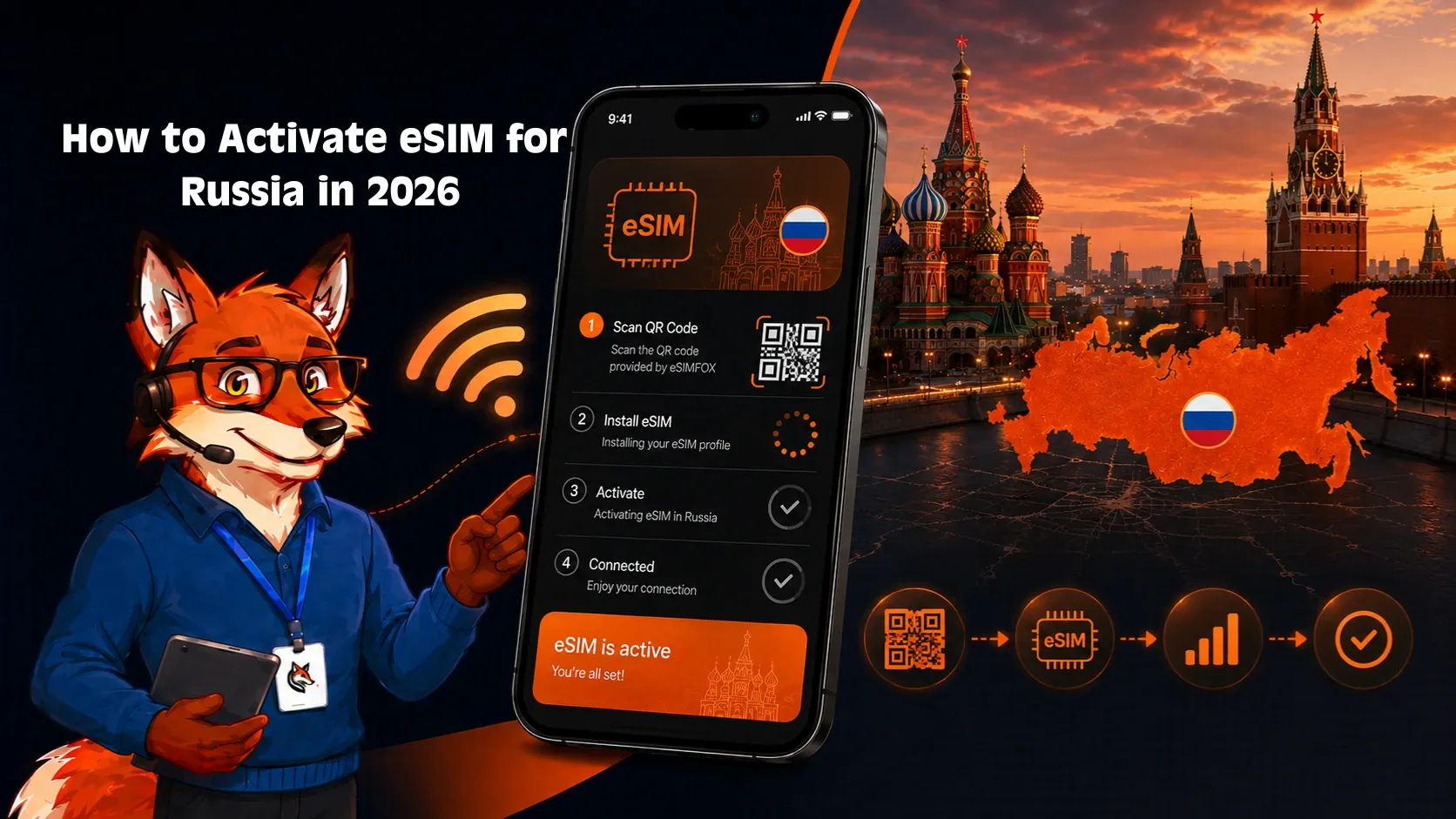
Install at home on Wi-Fi before you fly. Modern phones support three install paths — pick whichever your handset prefers. The whole flow takes under five minutes.
iOS direct installation (iPhone XS or newer)
- Buy your eSIMFOX Morocco plan from the eSIMFox website.
- Open the activation link from your purchase email on the iPhone itself — iOS will recognize the eSIM payload and prompt you to install it directly.
- Tap Continue → Add eSIM. Label the line "Morocco 2026" so it's clear in Settings → Cellular.
- Turn on Data Roaming for the Morocco eSIM line (Settings → Cellular → [Morocco eSIM] → Data Roaming → ON).
- Select the Morocco eSIM as your primary data line once you land at Mohammed V or Marrakech Menara.
QR code installation (iPhone and Android)
- Buy the plan; the QR code arrives by email immediately.
- Open the QR on a second screen (laptop, tablet) — you can't scan a QR with the same phone displaying it.
- iPhone: Settings → Cellular → Add eSIM → Use QR Code → scan. Android (Pixel, Samsung, Xiaomi, etc.): Settings → Network & Internet → SIMs → Add eSIM → scan.
- Label the line, enable Data Roaming, set as primary data.
Manual installation (fallback)
- If the QR doesn't scan, the email also includes the SM-DP+ address and activation code as text.
- iPhone: Settings → Cellular → Add eSIM → Enter Details Manually → paste SM-DP+ and activation code.
- Android: Settings → Network & Internet → SIMs → Add eSIM → Need help? → Enter it manually.
- Same labeling and roaming setup as above.
The eSIMFOX Morocco plan validity starts on first connection to a Moroccan network — install days or weeks before departure without burning data days. If anything goes wrong, see the Troubleshooting section below for the common No Service / slow speed / data-not-working fixes.
Troubleshooting your Morocco eSIM
Most eSIM activation issues in Morocco come from incorrect settings or network selection. The steps below cover the most common problems and how to fix them.
No service after landing:
- Turn on Data Roaming in your phone settings. Travel eSIMs require Data Roaming to be ON, even though you are not technically roaming.
- Restart your phone. This forces the device to re-scan for networks.
- Check that the eSIM is set as your primary data line in your phone settings.
Mobile data not working:
- Confirm Data Roaming is ON for the eSIM line.
- Check APN settings. Most eSIMs auto-configure APN, but if data still does not work, check the provider's support page for the correct APN values.
- Try manual network selection. Go to Settings > Mobile Data > Network Selection and pick Maroc Telecom, Inwi, or Orange Morocco manually.
QR code already used or cannot scan:
- If you already scanned the QR code once, the eSIM is installed. Check your phone's eSIM list in Settings > Mobile Data.
- If the QR code will not scan, try entering the activation code manually. Most providers include a manual code in the email.
- If you deleted the eSIM by accident, contact support for a replacement activation code. Do not buy a new plan unless the provider requires it.
Accidentally deleted eSIM:
If you deleted the eSIM profile from your phone, contact support for a replacement activation code. Most providers can issue a new QR code without charging for a new plan. Do not buy a new plan unless the provider confirms the old code is invalid.
Hotspot not working:
- Confirm your plan includes hotspot support. Most eSIMFOX plans include hotspot, but some providers restrict it.
- Check that the eSIM is set as your primary data line in your phone settings.
- Restart your phone and try enabling hotspot again.
When to contact support:
If none of the above steps work, contact your eSIM provider's support team. Most providers offer in-app chat or email support. Include your order number, device model, and a description of the problem.
When NOT to use a Morocco eSIM
Travel eSIMs are the right answer for almost every Morocco trip, but not every situation. Honest cases where a local Moroccan SIM works better:
- You need a +212 Moroccan phone number for local two-factor authentication. Some Moroccan banks (Attijariwafa, BMCE), the Hertz Morocco verification flow, and certain government portals require a Moroccan number for SMS codes. Travel eSIMs are data-only — no Moroccan SMS or voice. A Maroc Telecom or Inwi prepaid SIM from a downtown carrier shop satisfies this.
- Your phone doesn't support eSIM. Pre-2018 iPhones (iPhone XS and earlier) and many mid-range Androids before 2020 lack eSIM hardware. Check eSIMFOX compatibility before purchase; if your phone isn't supported, a physical SIM from Maroc Telecom or Orange Morocco at a city store is the fallback (CMN airport SIMs cost roughly twice as much).
- You're staying in Morocco more than 90 days. Travel eSIM validity caps at 30 days per profile — you'd be re-installing repeatedly. A local Maroc Telecom postpaid plan with monthly top-up is cleaner for long-haul stays or expat moves.
- You'll consume more than 100 GB across a multi-week digital-nomad stay. At extreme volumes, a local Inwi or Orange Morocco postpaid plan beats any travel eSIM on cost per GB once you're past three or four weeks.
- You're going off-grid into the High Atlas, Anti-Atlas, or deep Sahara. None of Morocco's networks cover everything — bring a satellite messenger (Garmin inReach, Zoleo) if you're trekking M'Goun, attempting Toubkal in winter, or pushing past Erg Chebbi into uncharted dunes.
Frequently asked questions
Final verdict: which is the best eSIM for Morocco?
After comparing verified competitor prices at matched data tiers, examining carrier coverage across Morocco's main tourist circuit (Marrakech, Casablanca, Rabat, Fes, Essaouira, the Sahara), and accounting for Morocco's quirks around VoIP and WhatsApp calling, eSIMFOX is the strongest pick for the vast majority of Morocco trips in 2026.
- Best per-GB value at the data tiers most Morocco travelers actually use (3 GB to 10 GB) — see the live plan selector for current pricing.
- Connects to Orange Morocco (the same network Airalo uses) for reliable coverage across the imperial cities, the Atlantic and Mediterranean coast, and the main routes into the Atlas Mountains and Sahara.
- Hotspot support included on every plan — share data with a travel companion at a Marrakech riad or a Chefchaouen guesthouse.
- Instant QR activation; no passport upload or Maroc Telecom kiosk paperwork at Mohammed V (CMN) or Marrakech Menara (RAK).
- Transparent pricing — no FUP-throttled "unlimited" surprise that competitor providers like Holafly use.
- WhatsApp, FaceTime, Instagram, and Telegram all work normally on data — see the social-apps section below for the nuance on calling.
The honest exception: travelers who need a +212 Moroccan phone number for local SIM-based two-factor authentication (some Moroccan banks, the Hertz Morocco rental verification, certain government portals) will still want a local Maroc Telecom or Inwi prepaid SIM alongside the eSIM. For everything else — short city breaks, the Marrakech-Fes-Chefchaouen-Sahara circuit, beach holidays in Essaouira or Agadir, Atlas trekking, business travel to Casablanca, digital-nomad stays in Tangier — install eSIMFOX before you fly and skip the airport queues.
Related Morocco travel guides
The guides below cover other connectivity and travel topics for Morocco. Each guide explains a different aspect of staying connected during your trip.
- Internet in Morocco — explains WiFi availability, mobile data options, and connectivity in major cities and rural areas.
- SIM card Morocco — compares local SIM options from Maroc Telecom, Inwi, and Orange Morocco, including pricing and where to buy.
- Roaming in Morocco — explains roaming costs for US, UK, and AU carriers and when roaming makes sense.
- Morocco country hub — links to all Morocco-related guides, including visa requirements, currency, and travel tips.
For device compatibility, check the eSIM supported devices list before purchase.
Frequently Asked Questions
Is eSIM available in Morocco?
What is the best eSIM for Morocco in 2026?
How much data do I need for Morocco?
Can I use hotspot with an eSIM in Morocco?
Should I buy an eSIM before traveling to Morocco?
Will my US/UK/AU carrier eSIM work in Morocco?
What is cheaper in Morocco: eSIM, local SIM, or roaming?
Do eSIM plans for Morocco include calls and SMS?
Does eSIM work at Mohammed V Airport or Marrakech Menara Airport?
Which mobile networks are best in Morocco?
Can I keep using WhatsApp or my normal number with a travel eSIM?
What should I do if my Morocco eSIM has no service?
Stay connected on your next trip
Browse eSIM plans for 200+ destinations and activate in 60 seconds.