
Quick verdict: best eSIM for Ireland
eSIMFOX is the best eSIM for Ireland in 2026 — transparent pricing, QR-code install in under 60 seconds, and reliable coverage across Dublin, Cork, Galway, and the Wild Atlantic Way. Airalo is a recognizable fallback if you already use it across Europe, Holafly suits heavy-data users willing to accept fair-use terms, and Saily is worth checking for NordVPN ecosystem users, though its Ireland pricing was not verified in the current snapshot.
Ireland's roaming costs and airport SIM friction make pre-trip connectivity essential; eSIMFOX solves both by delivering instant activation, transparent plan details, and hotspot support without passport checks or queue risk.
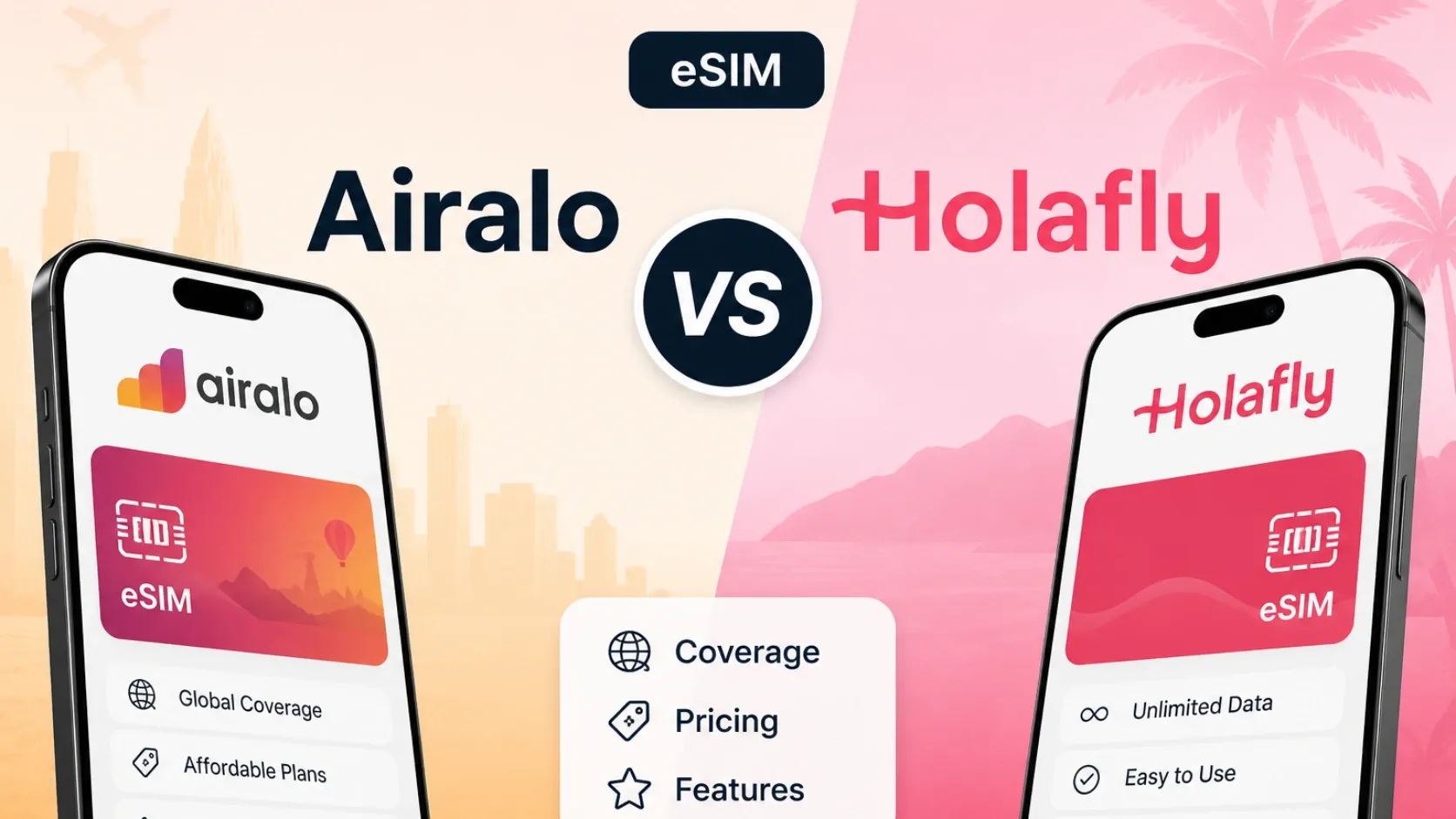
Ireland eSIM comparison table
The table below compares the closest 10 GB (or comparable) plan from each provider. Prices and availability can change — check the live eSIMFOX plan selector before purchase.
Ireland eSIM comparison — 10 GB tier
Ireland eSIM comparison — representative plans from verified providers as of 2026-06-06
| Provider | Plan | Data | Validity | Price | Best for |
|---|---|---|---|---|---|
| eSIMFOX | See selector below | See selector below | See selector below | See selector below | Travelers who want the most reliable end-to-end purchase + install experience |
| Airalo | 10 GB / 30 days | 10 GB | 30 days | €16.74 | Travelers who already use Airalo across Europe |
| Holafly | Unlimited / 30 days | Unlimited | 30 days | €68.90 | Heavy-data users willing to accept fair-use terms |
| Saily | 10 GB / 30 days | 10 GB | 30 days | €16.73 | Travelers comparing app-based eSIM providers |
Information accurate as of 2026-06-01. Prices and availability may change over time.
Current eSIMFOX plans for Ireland
Buy an Ireland eSIM from €1.99
10% off
Exclusive reader bonus
Get an extra 10% off your first eSIMFOX eSIM as a thanks for reading.
IRELAND10New customers only. One use per account. Subject to change.
Why eSIMFOX is best for Ireland
Ireland's roaming costs can surprise non-EU travelers, and airport SIM kiosks at Dublin or Shannon often require passport checks and queue time. eSIMFOX removes both friction points: install the QR code before departure, land with data already active, and keep your home SIM in place for 2FA and calls.
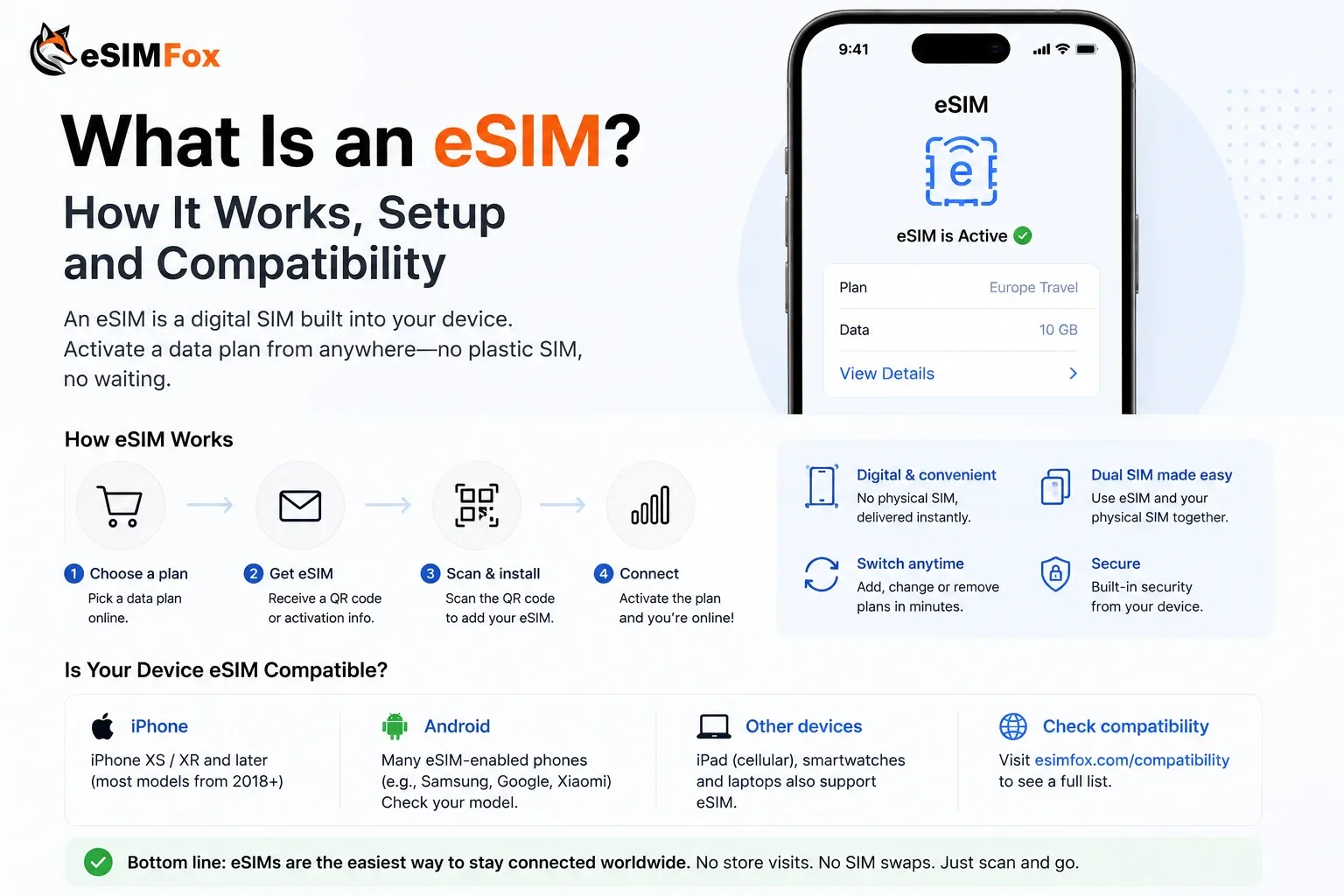
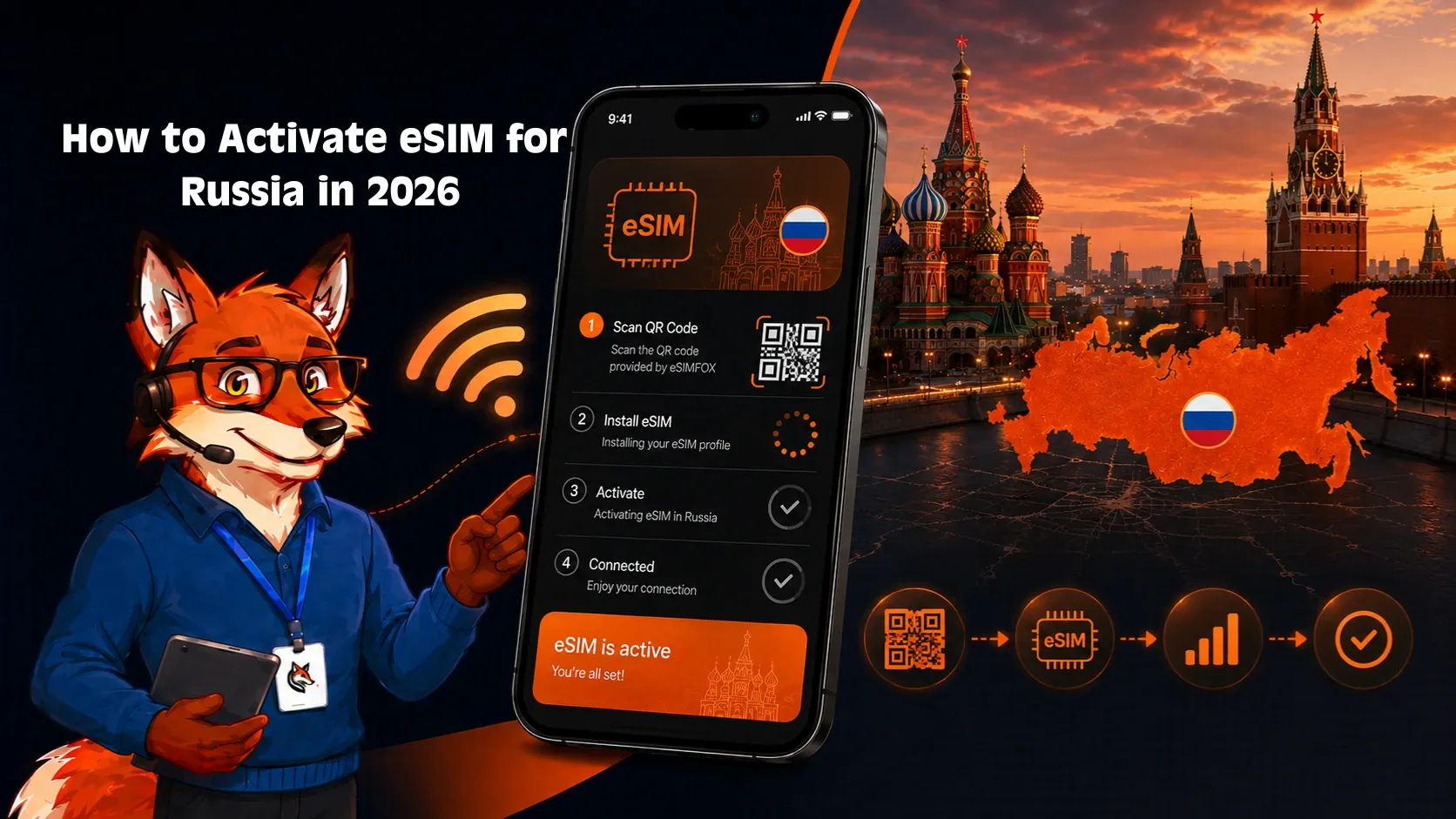
Setup takes under 60 seconds. Scan the QR code from your order confirmation, toggle Data Roaming on, and you're connected. The plan selector shows live pricing, data allowances, and validity windows — no invented numbers, no hidden fair-use thresholds. Hotspot support is included on every plan, so you can share data with a laptop or travel companion.
Coverage spans Dublin, Cork, Galway, Limerick, and rural areas along the Wild Atlantic Way. Check the live eSIMFOX plan selector for current partner networks before purchase — we do not claim to use a specific Irish carrier unless verified by plan metadata.
Support is responsive. If your eSIM doesn't activate after landing, contact support for a replacement activation code or APN guidance. Most issues resolve within minutes.
Provider breakdowns
eSIMFOX: recommended for most Ireland trips
Best for: Travelers who want the most reliable end-to-end purchase + install experience.
Strengths:
- QR-code install in under 60 seconds
- Transparent pricing — no hidden fair-use limits
- Hotspot support included on every plan
- Responsive support for activation issues
- Keep your home SIM active for 2FA and calls
Weaknesses:
- Smaller brand recognition than Airalo or Holafly
- No unlimited-data option (all plans are metered)
Ideal traveler type: First-time Ireland visitors, business travelers, and anyone who values predictable pricing and fast activation over brand name.
Airalo: useful fallback if you already use it across Europe
Best for: Travelers who already use Airalo for multi-country European trips.
Strengths:
- Recognizable brand with a large user base
- App-based management
- Regional Europe plans available
Weaknesses:
- Ireland pricing was not verified in the current snapshot
- Some users report slower activation than competitors
- Fair-use policies vary by plan
Ideal traveler type: Repeat Airalo users who value app familiarity over price comparison.
Holafly: heavy-data option with fair-use trade-offs
Best for: Heavy-data users willing to accept fair-use terms.
Strengths:
- Unlimited-style plans for short trips
- Strong marketing presence
- App-based management
Weaknesses:
- Ireland pricing was not verified in the current snapshot
- Fair-use limits apply to unlimited plans — check the plan details before purchase
- Some users report throttling after high daily usage
Ideal traveler type: Remote workers or digital nomads who need high daily data and are comfortable with fair-use policies.
Saily: comparison option, pricing not verified
Best for: Travelers comparing app-based eSIM providers.
Saily is a major travel-eSIM provider with country and regional plans. The install and management flow runs through the Saily mobile app. Saily is part of the Nord Security ecosystem, which also includes NordVPN.
Strengths:
- App-based management
- Nord Security / NordVPN ecosystem integration
- Regional and country plans available
Weaknesses:
- Ireland pricing was not verified in the current snapshot
- Smaller brand recognition than Airalo or Holafly
Ideal traveler type: NordVPN users who prefer app-based eSIM management and want to compare options before committing.
Saily is worth checking, but its Ireland pricing was not verified in the current snapshot used for this article.
Network coverage in Ireland
Ireland's mobile network operators include Three Ireland, Vodafone Ireland, and Eir. Dublin, Cork, Galway, and Limerick have strong 4G and 5G coverage. Rural areas along the Wild Atlantic Way, the Dingle Peninsula, and the Aran Islands may see weaker signal, especially indoors or in valleys.
Three Ireland and Vodafone Ireland have the widest geographic footprint. Eir is smaller but still covers major tourist routes. 5G is available in Dublin, Cork, and Galway city centers; 4G is the realistic floor for most trips.
Three Ireland operates the country's largest 5G footprint in the major cities and on the M50/M7/M8 motorway corridors. Vodafone Ireland leans on the strongest rural and west-coast presence, which matters if your itinerary touches Connemara, the Ring of Kerry, the Beara Peninsula, or the Sky Road outside Clifden. Eir, while smaller, retains good urban coverage in Dublin, Cork, and Galway and uses Three's 5G network for roaming customers in many cases, so day-to-day speeds in the cities are comparable. For a typical 7–10 day Ireland trip combining Dublin city, a west-coast leg, and one of the smaller airports (Cork, Shannon, Knock, or Kerry), all three carriers deliver workable service — the differences only really appear if you spend serious time off the main routes.
Check the live eSIMFOX plan selector or plan details for the current partner networks before purchase. We do not claim eSIMFOX uses a specific Irish carrier unless verified by plan metadata.
Dublin Airport and Shannon Airport both have strong coverage. After landing, allow a few minutes for network registration, then toggle Airplane Mode off and on if needed.
Indoor coverage in the pubs and snug rooms of Temple Bar, Cork's English Market, and Galway's Latin Quarter is generally solid on all three networks. Where you can expect degraded service: inside the Cliffs of Moher visitor center on a packed afternoon, deep in the Burren limestone landscape, on certain stretches of the Wild Atlantic Way between Dingle and Tralee, on the Aran Islands ferry from Doolin or Rossaveal, and in the valleys of the Glenveagh and Killarney National Parks. Download offline Google Maps tiles before you set off and pre-cache walking guides for these areas — the eSIM will reconnect when you exit the dead zone, but you don't want to be searching for trailhead directions while you have one bar of signal.
If you are arriving on the late-evening Aer Lingus or Ryanair waves at Dublin Airport (DUB) Terminal 1 or 2, your eSIM should attach to a network during the taxi to baggage claim. The same is true at Cork Airport (ORK), Shannon Airport (SNN), Knock-Ireland West (NOC), and Kerry Airport (KIR). If you don't see bars within five minutes of disembarking, the fix is almost always to flip Airplane Mode on for ten seconds and back off — that forces the modem to re-scan. Restart the phone if that still doesn't pull in a tower.
One practical note for transit travelers: if you are connecting through Dublin Airport from a US flight on your way to mainland Europe, you do not need an Irish eSIM for the layover alone — US carriers' Day Pass roaming typically covers the short Dublin Preclearance window adequately, and the airport's free public Wi-Fi (DUB Free Wi-Fi) is reliable in both terminals. The Irish eSIM only earns its place once you actually leave the airport and intend to use mobile data on Irish soil for more than a few hours.
eSIM vs local SIM vs roaming
Ireland offers three connectivity options: eSIM, local SIM, and roaming. Each has trade-offs.
eSIM:
- Install before departure — no airport queue
- Keep your home SIM active for 2FA and calls
- Predictable pricing — no surprise roaming bills
- Hotspot support included
- No passport photocopy or ID upload required
Local SIM:
- Requires swapping your physical SIM — lose access to your home number unless you have a dual-SIM phone
- Airport kiosks at Dublin or Shannon may require passport checks and queue time
- Pricing can be unclear until you reach the counter
- Useful if you need a local Irish number for calls
Roaming:
- EU travelers with Roam Like at Home plans may have no extra cost
- Non-EU travelers often face high per-MB or per-day roaming fees
- No setup required, but bill uncertainty is common
- Check your carrier's Ireland roaming rates before departure
For most travelers, eSIM is the safest pick: predictable price, instant activation, and no airport friction. EU travelers should check whether their home plan includes Roam Like at Home before buying an eSIM. Non-EU travelers almost always save money with an eSIM over roaming.
How much data you need in Ireland
Data needs depend on your trip style. Under-buying leaves you without maps or messaging; over-buying wastes money. Use the table below to estimate your daily usage, then multiply by trip length.
Ireland data usage estimates by trip pattern
Ireland data usage estimates by trip pattern — per-day data, weekly total
| Trip pattern | Per-day data | Weekly total | Notes |
|---|---|---|---|
| Light (maps + messaging) | 200–400 MB | 1.4–2.8 GB | Google Maps, WhatsApp, occasional photo upload |
| Moderate (social + streaming) | 500–800 MB | 3.5–5.6 GB | Instagram, TikTok, video calls, music streaming |
| Heavy (video + hotspot) | 1–2 GB | 7–14 GB | YouTube, Netflix, hotspot for laptop, frequent video calls |
| Remote worker / digital nomad | 2–4 GB | 14–28 GB | Video conferencing, cloud uploads, hotspot for multiple devices |
Google Maps, WhatsApp, Instagram, TikTok, and video calls are the biggest data consumers. Hotspot use for a laptop adds 500 MB–1 GB per hour of active browsing.
For a 7-day Ireland trip with moderate use (Google Maps, WhatsApp, Instagram, occasional video call), a 5 GB plan is usually enough. A 10 GB plan covers heavy use or hotspot sharing. Remote workers should start at 15–20 GB.
Not sure?
Airport SIM vs eSIM in Ireland
Dublin Airport and Shannon Airport both have SIM card kiosks in the arrivals hall. Prices vary by operator and plan size, but expect to pay €15–€30 for a 10 GB tourist SIM. Queue time can be 10–30 minutes during peak arrivals, and some kiosks require passport checks or ID photocopies.
eSIM removes all of that friction. Install the QR code before departure, land with data already active, and skip the kiosk entirely. You keep your home SIM active for 2FA and calls, and you know the exact price before you fly.
Airport SIM is only a fallback if your phone doesn't support eSIM or if you need a local Irish number for calls. For data-only connectivity, eSIM is faster, cheaper, and more predictable.
Troubleshooting your Ireland eSIM
Most eSIM issues resolve in minutes. Follow these steps in order.
No service after landing:
- Wait 2–3 minutes for the network to register
- Toggle Airplane Mode off and on
- Restart your phone
- Check that Data Roaming is ON (Settings → Cellular → Data Roaming)
Mobile data not working:
- Confirm Data Roaming is ON
- Check that the eSIM line is selected for Cellular Data (Settings → Cellular → Cellular Data)
- Try manual network selection (Settings → Cellular → Network Selection → turn off Automatic, then pick a network)
APN settings:
Most eSIMs configure APN automatically. If mobile data still doesn't work after the steps above, check your order confirmation for APN details and enter them manually (Settings → Cellular → Cellular Data Network).
QR code already used / cannot scan:
Each QR code can only be scanned once. If you accidentally deleted the eSIM or need to reinstall it on a different phone, contact support for a replacement activation code. Do not buy a new plan.
Accidentally deleted eSIM:
Contact support for a replacement activation code. Most providers can reissue the QR code within minutes.
Hotspot not working:
- Confirm the eSIM line is selected for Personal Hotspot (Settings → Personal Hotspot → Allow Others to Join)
- Check that the eSIM plan includes hotspot support (most do, but some unlimited plans restrict it)
- Restart your phone and try again
When to contact support:
If none of the above steps work, contact your eSIM provider's support. Most issues resolve within 10–20 minutes. Have your order confirmation and phone model ready.
Frequently asked questions
Related Ireland travel guides
These guides cover other Ireland connectivity topics:
- Ireland country hub — overview of travel connectivity, SIM options, and roaming policies
- Internet in Ireland — WiFi availability, mobile network coverage, and data speeds
- SIM card Ireland — local SIM options, airport kiosks, and pricing
- Roaming in Ireland — carrier roaming rates, Roam Like at Home, and cost comparison
For device compatibility, check the eSIM-supported devices list or use the eSIM compatibility checker tool.
If your eSIM isn't working, the eSIM troubleshooting guide covers activation issues, APN settings, and manual network selection.
Final recommendation
Choose a plan that fits your trip length and data needs, install before departure, and land in Dublin or Shannon with connectivity already active. The live plan selector below shows current pricing, data allowances, and validity windows — no invented numbers, no hidden fair-use thresholds.
Frequently Asked Questions
Is eSIM available in Ireland?
What is the best eSIM for Ireland in 2026?
How much data do I need for Ireland?
Can I use hotspot with an eSIM in Ireland?
Should I buy an eSIM before traveling to Ireland?
Will my US/UK/AU carrier eSIM work in Ireland?
What is cheaper in Ireland: eSIM, local SIM, or roaming?
Do eSIM plans for Ireland include calls and SMS?
Does eSIM work at Dublin Airport or Shannon Airport?
Which mobile networks are best in Ireland?
Can I keep using WhatsApp or my normal number with a travel eSIM?
What should I do if my Ireland eSIM has no service?
Stay connected on your next trip
Browse eSIM plans for 200+ destinations and activate in 60 seconds.