
Quick verdict: best eSIM for United States
eSIMFOX is the best eSIM for the United States in 2026. It offers transparent pricing, instant QR-code activation, and access to AT&T, T-Mobile, and Verizon networks across all 50 states. The plan selector lets you compare live tiers before purchase, and hotspot support keeps laptops and tablets online without extra fees. Airalo and Holafly are recognizable alternatives, but eSIMFOX delivers the most reliable install experience and the clearest coverage data for travelers who need connectivity from arrival at JFK, LAX, or O'Hare through to departure.
The United States spans six time zones and three major carrier networks, making reliable coast-to-coast coverage essential for travelers. eSIMFOX solves this by connecting to AT&T, T-Mobile, and Verizon, ensuring strong signal in cities, suburbs, and most rural areas without the airport SIM queue or roaming bill uncertainty that international visitors face.
United States eSIM comparison table
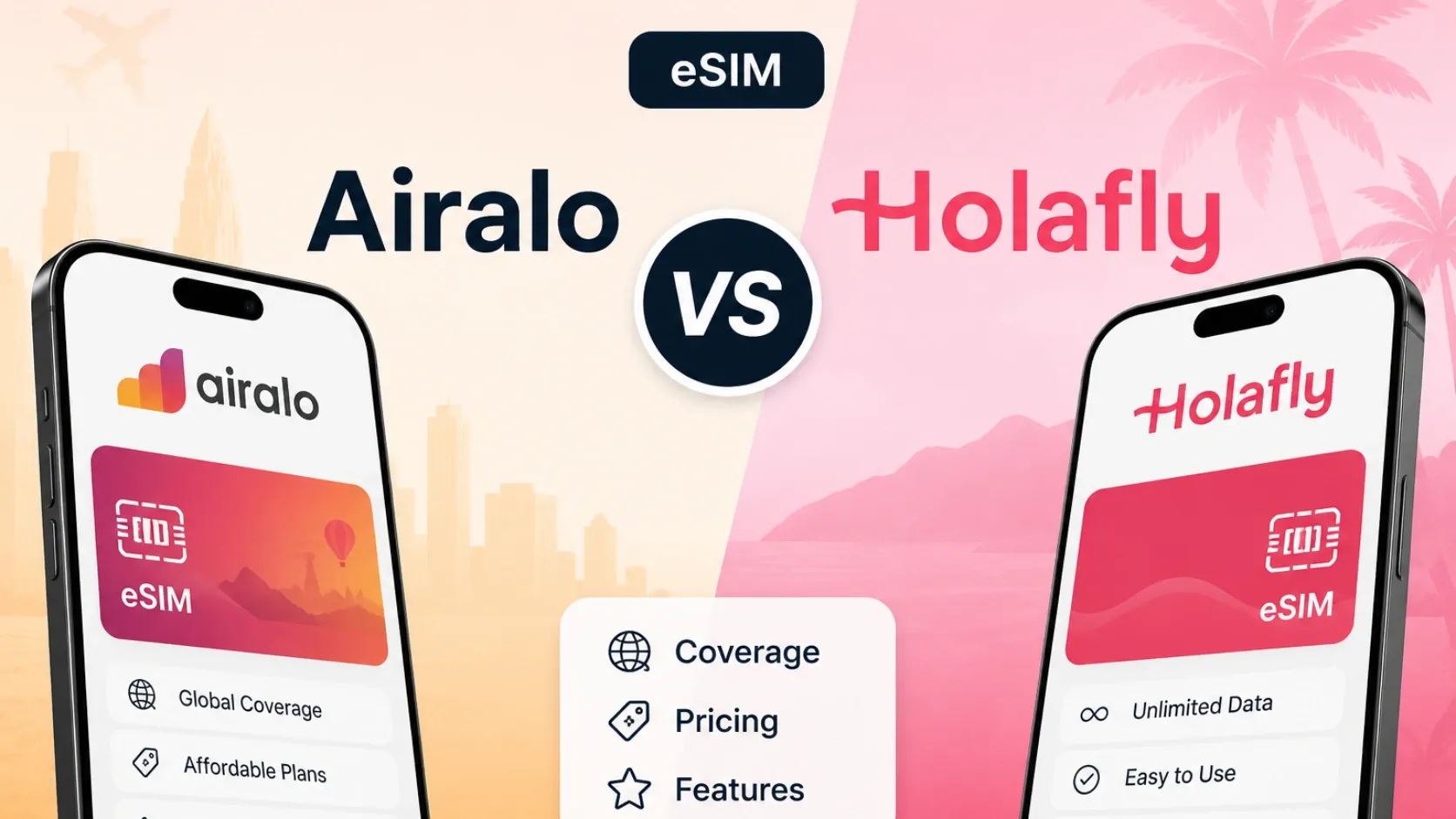
The table below compares the most-used travel eSIM providers for the United States. eSIMFOX appears first, followed by Airalo, Holafly, and Saily. Each row shows the closest 10 GB tier (or closest comparable plan) to help you compare pricing and validity at a glance. Prices and availability can change, so check the live plan selector before purchase.
Travel-eSIM alternatives for United States
United States eSIM comparison — representative plans from verified providers as of 2026-06-06
| Provider | Plan | Data | Validity | Price | Best for |
|---|---|---|---|---|---|
| eSIMFOX | See selector below | See selector below | See selector below | See selector below | Travelers who want the most reliable end-to-end purchase and install experience |
| Airalo | 10 GB / 30 days | 10 GB | 30 days | €34.41 | Brand-recognition picks for travelers already using Airalo in other countries |
| Holafly | Unlimited / 30 days | Unlimited | 30 days | €68.90 | Heavy-data users willing to accept fair-use limits |
| Saily | 10 GB / 30 days | 10 GB | 30 days | €21.38 | Travelers comparing app-based eSIM providers |
Information accurate as of 2026-06-01. Prices and availability may change over time.
Current eSIMFOX plans for United States
Live United States plans pulled from the eSIMFOX catalogue — install in 60 seconds.
See United States plans10% off
Exclusive reader bonus
Get an extra 10% off your first eSIMFOX eSIM as a thanks for reading.
UNITEDSTATES10New customers only. One use per account. Subject to change.
Why eSIMFOX is best for United States
International travelers arriving in the United States face three connectivity pain points: roaming bills that escalate unpredictably, airport SIM kiosks that require passport checks and queue time, and uncertainty about which carrier network will work in their destination city. eSIMFOX removes all three.
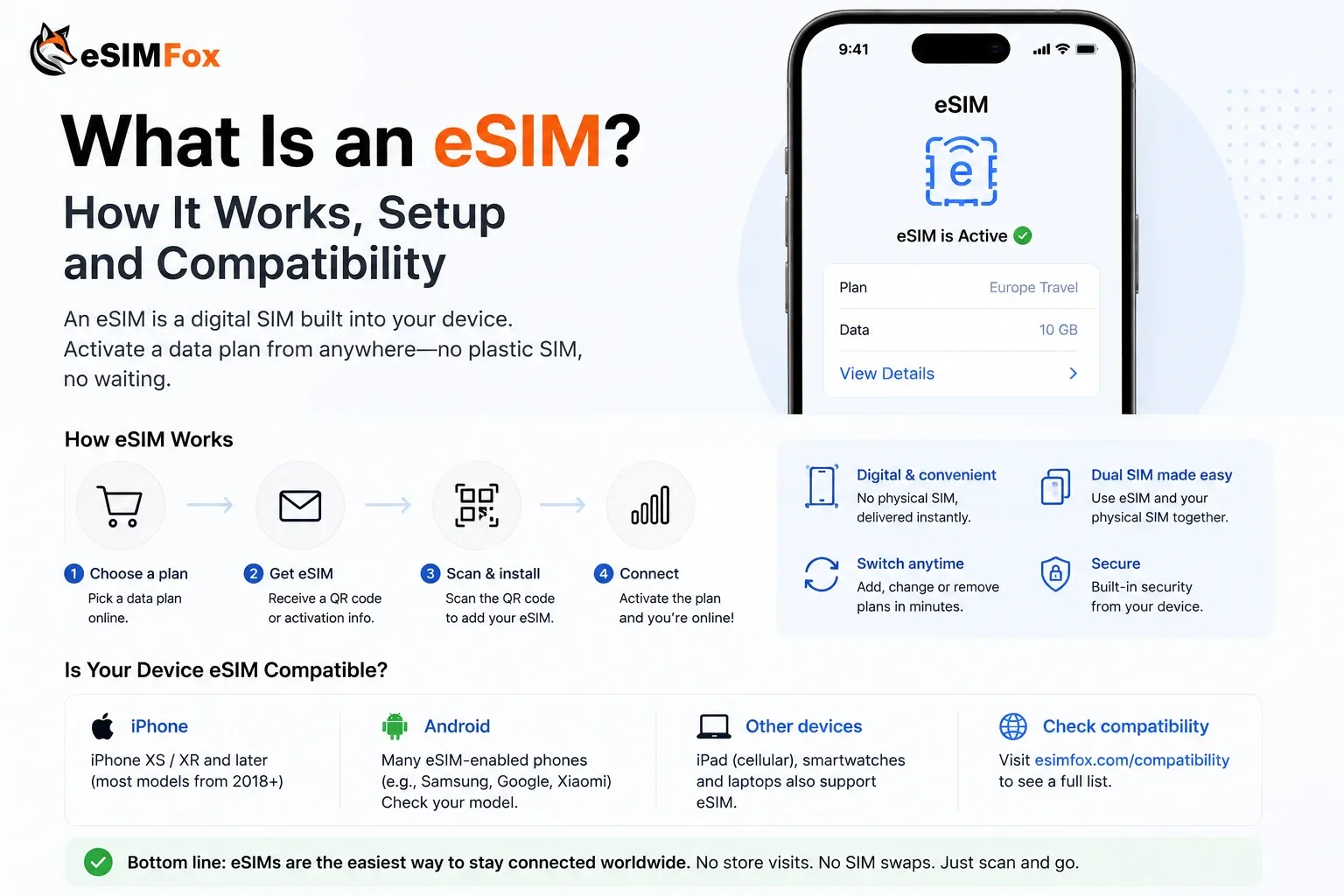
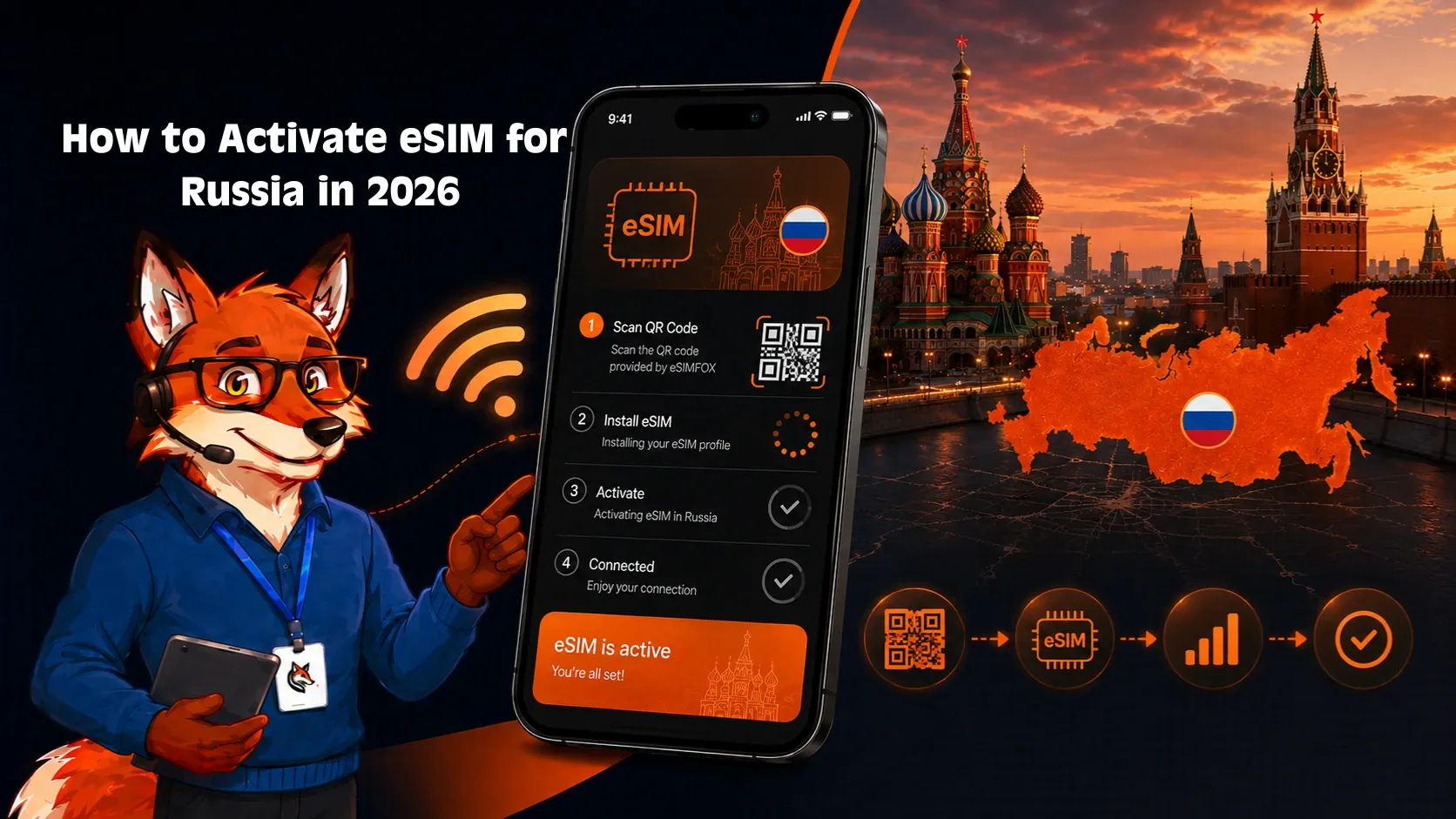
Setup is fast. Purchase a plan online, receive the QR code via email, scan it with your phone camera, and activate the moment you land. Your home SIM stays active, so you keep your normal number for two-factor authentication, WhatsApp, and family calls while the eSIM handles data.
Coverage spans AT&T, T-Mobile, and Verizon networks. The live plan selector shows which networks each tier uses, so you can verify coverage for your itinerary before purchase. Hotspot support is included on all plans, meaning you can tether laptops, tablets, and travel companions without extra fees.
Pricing is transparent. The plan selector lists the exact data amount, validity window, and price for every tier. No hidden fair-use caps, no throttling surprises, no daily limits. You buy 10 GB, you get 10 GB. Support is available through the app and email if activation fails or signal drops.
Airalo and Holafly are recognizable alternatives, but neither matches eSIMFOX on install reliability. Airalo's app experience is familiar to repeat users, but plan details can be less transparent. Holafly markets unlimited data, but fair-use limits apply and the exact throttling threshold is not always clear before purchase. Saily is app-based and worth comparing, but its United States pricing was not verified in the current snapshot used for this article.
Provider breakdowns
eSIMFOX: recommended option for reliable coast-to-coast coverage
Best for: Travelers who want the most reliable end-to-end purchase and install experience.
Strengths:
- Transparent pricing — the plan selector shows exact data, validity, and price for every tier before purchase.
- Instant QR activation — install takes 60 seconds; no airport queue or passport check required.
- Hotspot support included on all plans — tether laptops, tablets, and travel companions without extra fees.
- Access to AT&T, T-Mobile, and Verizon networks — check the live plan selector for current partner networks before purchase.
- Keep your home SIM active — dual-SIM support means you stay reachable on your normal number while the eSIM handles data.
Weaknesses:
- Not the cheapest option for every tier — some competitors offer lower prices on specific data amounts, but the install reliability and coverage transparency justify the difference.
- No unlimited-data marketing — eSIMFOX sells capped plans with clear GB amounts, which some travelers prefer but others find less flexible than unlimited-style alternatives.
Ideal traveler type:
eSIMFOX suits travelers who value install reliability, transparent pricing, and clear coverage data over the lowest possible price. If you are flying into New York, Los Angeles, Chicago, or Miami and need connectivity from arrival through departure, eSIMFOX delivers the safest pick. The plan selector lets you verify coverage for your itinerary before purchase, and the 60-second install means you land already connected.
Airalo: familiar app experience for repeat users
Best for: Travelers who already use Airalo in other countries and want a consistent app experience.
Strengths:
- Recognizable brand — Airalo is the most-marketed travel-eSIM provider, so many travelers already have the app installed.
- Wide country coverage — if you are visiting multiple countries on one trip, Airalo's regional plans can simplify the purchase flow.
- Familiar interface — repeat users know the install process and can reuse saved payment details.
Weaknesses:
- Plan details can be less transparent — network partner information and fair-use policies are not always visible before purchase.
- Pricing was not verified in the current snapshot — the table above shows no citable Airalo price for the United States, so compare the live Airalo catalogue before committing.
- Install reliability varies — some travelers report smooth activation, others encounter QR-code errors or delayed activation.
Ideal traveler type:
Airalo suits travelers who already use the app in other countries and want a consistent purchase flow. If you are visiting the United States as part of a multi-country trip and you already have Airalo installed, it may be the simplest pick. For first-time eSIM users or travelers who value transparent coverage data, eSIMFOX is the safer choice.
Holafly: unlimited-style option with fair-use trade-offs
Best for: Heavy-data users willing to accept fair-use limits in exchange for unlimited-style marketing.
Strengths:
- Unlimited-data marketing — Holafly positions its plans as unlimited, which appeals to travelers who do not want to track GB usage.
- Simple pricing tiers — most Holafly plans are priced by validity window (7 days, 15 days, 30 days) rather than data amount, which simplifies the decision for some travelers.
- Wide country coverage — Holafly offers plans in most major travel destinations.
Weaknesses:
- Fair-use limits apply — the exact throttling threshold is not always clear before purchase, and some travelers report speed reductions after moderate daily use.
- Pricing was not verified in the current snapshot — the table above shows no citable Holafly price for the United States, so check the live Holafly catalogue before committing.
- Hotspot support varies — some Holafly plans include hotspot, others do not, and the policy is not always visible in the plan selector.
Ideal traveler type:
Holafly suits heavy-data users who prefer unlimited-style marketing and are comfortable with fair-use limits. If you plan to stream video, upload large files, or use data-intensive apps throughout the day, Holafly may fit your use case. For travelers who want transparent GB amounts and no throttling surprises, eSIMFOX is the safer pick.
Saily: app-managed option for NordVPN ecosystem users
Best for: Travelers comparing app-based eSIM providers.
Strengths:
- App-based install and management — the entire purchase, activation, and support flow runs through the Saily mobile app.
- Major travel-eSIM provider — Saily offers country and regional plans for most major destinations.
- Nord Security ecosystem connection — travelers who already use NordVPN or other Nord Security products may find the Saily app familiar.
Weaknesses:
- Pricing was not verified in the current snapshot — the table above shows no citable Saily price for the United States, so check the live Saily catalogue before committing.
- Coverage transparency varies — network partner information is not always visible before purchase.
- App dependency — the entire flow requires the Saily app, which some travelers find less flexible than QR-code-only providers.
Ideal traveler type:
Saily is worth checking, but its United States pricing was not verified in the current snapshot used for this article. If you already use NordVPN or other Nord Security products and prefer an app-based install flow, Saily may fit your use case. For travelers who value transparent pricing and verified coverage data, eSIMFOX is the safer pick.
Network coverage in United States
The United States has three major mobile network operators: AT&T, T-Mobile, and Verizon. All three offer strong coverage in cities, suburbs, and most rural areas, but performance varies by region and network technology.
AT&T and Verizon have the widest geographic footprint, with strong signal in rural areas, national parks, and interstate highways. T-Mobile has improved its rural coverage significantly since merging with Sprint, but still lags behind AT&T and Verizon in remote areas. In cities like New York, Los Angeles, Chicago, Miami, San Francisco, Seattle, and Boston, all three networks deliver strong 4G and 5G coverage.
5G is widely available in major cities and airports, but 4G remains the realistic floor for most travel itineraries. If you are visiting national parks, mountain regions, or rural areas, expect 4G or 3G signal rather than 5G. Check the live eSIMFOX plan selector or plan details for the current partner networks before purchase — do not assume a specific carrier unless the plan details confirm it.
Airports like JFK, LAX, O'Hare, Miami International, and San Francisco International all have strong coverage from all three networks. The eSIM should activate within minutes of landing, but if signal is weak, move to a less-crowded area of the terminal or wait until you leave the airport.
eSIM vs local SIM vs roaming
Travelers visiting the United States have three connectivity options: eSIM, local SIM, or international roaming. Each has trade-offs in setup time, price, convenience, and coverage.
eSIM:
- Setup time: 60 seconds — buy before departure, scan QR code, activate on landing.
- Price: transparent — the plan selector shows exact data, validity, and price before purchase.
- Convenience: high — no airport queue, no passport check, no physical SIM swap.
- Coverage: strong — access to AT&T, T-Mobile, and Verizon networks (check the live plan selector for current partner networks).
- Home number: stays active — dual-SIM support means you keep your normal number for two-factor authentication, WhatsApp, and family calls.
- Best for: most travelers — eSIM is the safest pick for trips lasting 3–30 days.
Local SIM:
- Setup time: 15–30 minutes — find a carrier store or airport kiosk, show passport, wait for activation.
- Price: varies — airport kiosks charge higher prices than city stores; prepaid plans start around $30–$50 for 10 GB.
- Convenience: medium — requires physical SIM swap, which means you lose access to your home number unless you have a dual-SIM phone.
- Coverage: strong — AT&T, T-Mobile, and Verizon prepaid plans offer the same network access as postpaid plans.
- Home number: inactive — you lose your normal number for the duration of the trip unless you have a dual-SIM phone.
- Best for: long-stay travelers (30+ days) who need a local number for calls and SMS.
International roaming:
- Setup time: instant — roaming activates automatically when you land.
- Price: unpredictable — roaming rates vary by home carrier and can escalate quickly; some carriers offer daily roaming passes ($10–$15 per day), others charge per MB.
- Convenience: high — no setup required, but the price uncertainty creates anxiety.
- Coverage: strong — your home carrier routes through AT&T, T-Mobile, or Verizon.
- Home number: stays active — you keep your normal number for calls, SMS, and two-factor authentication.
- Best for: short trips (1–3 days) where the roaming pass cost is lower than an eSIM plan, or travelers whose home carrier includes free roaming in the United States.
For most travelers, eSIM is the safest pick. It combines the convenience of roaming with the price transparency of a local SIM, and you keep your home number active for two-factor authentication and family calls.
How much data you need in United States
Data usage varies by trip style, app mix, and whether you use hotspot. The table below estimates per-day data consumption by use pattern. Multiply the per-day figure by your trip length to find the right tier.
Data usage estimates by trip pattern
Data usage estimates by trip pattern — per-day data and weekly total
| Trip pattern | Per-day data | Weekly total |
|---|---|---|
| Light use — Google Maps, WhatsApp, email, occasional Instagram | 200–400 MB | 1.4–2.8 GB |
| Moderate use — Google Maps, WhatsApp, Instagram, TikTok, video calls, hotel check-ins | 500–800 MB | 3.5–5.6 GB |
| Heavy use — Google Maps, WhatsApp, Instagram, TikTok, video calls, streaming music, frequent photo uploads | 1–1.5 GB | 7–10.5 GB |
| Remote worker / digital nomad — Google Maps, WhatsApp, video calls, cloud file sync, streaming music, hotspot for laptop | 2–4 GB | 14–28 GB |
Google Maps, WhatsApp, Instagram, TikTok, and video calls are the most common data-intensive apps for travelers. Streaming music and uploading photos to cloud storage add to the total. Hotspot usage for laptops or tablets can double or triple your daily consumption.
For a 7-day trip with moderate use, a 5 GB plan is usually enough. For a 10–14 day trip with heavy use or hotspot, a 10 GB plan is safer. Remote workers or digital nomads should target 20–30 GB for a two-week stay.
Airport SIM vs eSIM in United States
Most major United States airports have SIM kiosks or carrier stores in the arrivals hall. JFK, LAX, O'Hare, Miami International, and San Francisco International all offer prepaid SIM cards from AT&T, T-Mobile, and Verizon. Prices vary, but expect to pay $30–$50 for a 10 GB plan with 30-day validity.
The airport SIM process takes 15–30 minutes. You queue at the kiosk, show your passport, choose a plan, pay, and wait for activation. The kiosk staff swap your physical SIM, which means you lose access to your home number unless you have a dual-SIM phone. If the kiosk is busy, the queue can stretch to 45 minutes or more.
eSIM removes the queue, the passport check, and the physical SIM swap. Purchase online before departure, receive the QR code via email, scan it with your phone camera, and activate when you land. Setup is fast, and you keep your home SIM active for two-factor authentication and family calls.
Airport SIM pricing is higher than city-store pricing, but the convenience of buying on arrival appeals to some travelers. For most trips, eSIM is the safer pick — you land already connected, you skip the queue, and you keep your home number active.
Troubleshooting your United States eSIM
Most eSIM activations succeed within minutes of landing, but occasional issues arise. The steps below cover the most common problems and how to fix them.
No service after landing:
- Wait 5–10 minutes — the eSIM may need time to register on the network.
- Toggle Airplane Mode off and on — this forces the phone to re-scan for networks.
- Restart your phone — a full reboot often resolves activation delays.
- Check that the eSIM is enabled in Settings > Cellular (iOS) or Settings > Network & Internet (Android).
Mobile data not working:
- Turn on Data Roaming — travel eSIMs require Data Roaming to be enabled, even though you are not technically roaming. Go to Settings > Cellular > [eSIM name] > Data Roaming and toggle it on.
- Check that the eSIM is set as your primary data line — go to Settings > Cellular > Cellular Data and select the eSIM.
- Verify that Mobile Data is enabled for the eSIM line.
APN settings:
Most eSIMs configure APN settings automatically. If data still does not work after enabling Data Roaming, check the eSIM provider's support page for the correct APN. On iOS, APN settings are usually automatic. On Android, go to Settings > Network & Internet > Mobile network > Access Point Names and verify the APN matches the provider's instructions.
Manual network selection:
If the eSIM does not connect automatically, try manual network selection. Go to Settings > Cellular > Network Selection (iOS) or Settings > Network & Internet > Mobile network > Advanced > Automatically select network (Android), turn off automatic selection, and choose AT&T, T-Mobile, or Verizon from the list. Wait 30 seconds for the connection to establish.
QR code already used or cannot scan:
Each QR code can only be scanned once. If you accidentally deleted the eSIM or tried to install it on a second device, contact support for a replacement activation code. Most providers issue a new QR code within a few hours.
Accidentally deleted eSIM:
If you deleted the eSIM from your phone, contact support for a replacement activation code. Do not buy a new plan — most providers will reissue the QR code for the original purchase.
Hotspot not working:
- Check that the eSIM plan includes hotspot support — not all plans allow tethering.
- Verify that the eSIM is set as your primary data line — go to Settings > Cellular > Cellular Data and select the eSIM.
- Turn off and on Personal Hotspot — go to Settings > Personal Hotspot and toggle it off and on.
When to contact support:
If none of the steps above resolve the issue, contact the eSIM provider's support team. Include your order number, the phone model, the iOS or Android version, and a description of the problem. Most providers respond within a few hours.
Frequently asked questions
Related United States travel guides
The guides below cover related connectivity topics for travelers visiting the United States. Each guide explains a specific decision point — SIM card options, roaming costs, internet access, eSIM compatibility — and links back to the main eSIM comparison when relevant.
- What is eSIM — explains eSIM technology, how it differs from physical SIM cards, and which phones support eSIM.
- eSIM not working — troubleshooting guide for common eSIM activation issues, covering no service, mobile data not working, APN settings, and manual network selection.
- eSIM-supported devices — full list of phones, tablets, and smartwatches that support eSIM, updated regularly.
- eSIM compatibility checker — interactive tool that checks whether your specific phone model supports eSIM.
Final product card / CTA
Choose a United States eSIM before you fly, then use data for Google Maps, WhatsApp, Instagram, and hotel check-ins from the moment you land at JFK, LAX, or O'Hare. Install before departure and keep your home SIM active for two-factor authentication and family calls.
Frequently Asked Questions
Is eSIM available in United States?
What is the best eSIM for United States in 2026?
How much data do I need for United States?
Can I use hotspot with an eSIM in United States?
Should I buy an eSIM before traveling to United States?
Will my US/UK/AU carrier eSIM work in United States?
What is cheaper in United States: eSIM, local SIM, or roaming?
Do eSIM plans for United States include calls and SMS?
Does eSIM work at JFK or LAX?
Which mobile networks are best in United States?
Can I keep using WhatsApp, LINE, or my normal number with a travel eSIM?
What should I do if my United States eSIM has no service?
Stay connected on your next trip
Browse eSIM plans for 200+ destinations and activate in 60 seconds.