
Quick verdict: best eSIM for Peru
For most travelers heading to Peru in 2026, eSIMFOX is the clearest pick. Install before you fly, land with data already active, and avoid the Jorge Chávez Airport SIM counter entirely. Plans start from competitive tiers, coverage reaches Lima, Cusco, Arequipa, and the Sacred Valley, and your home number stays accessible for calls and authentication codes.
Peru's tourist trail — Lima to Cusco to Machu Picchu — demands reliable mobile data for maps, ride-hailing, and hotel bookings, yet airport SIM kiosks can mean long waits and unclear pricing; eSIMFOX solves this with instant QR activation, transparent plan tiers, and coverage that works from the coast to the Andes without the passport-photocopy friction of a local prepaid SIM.
Peru eSIM comparison table
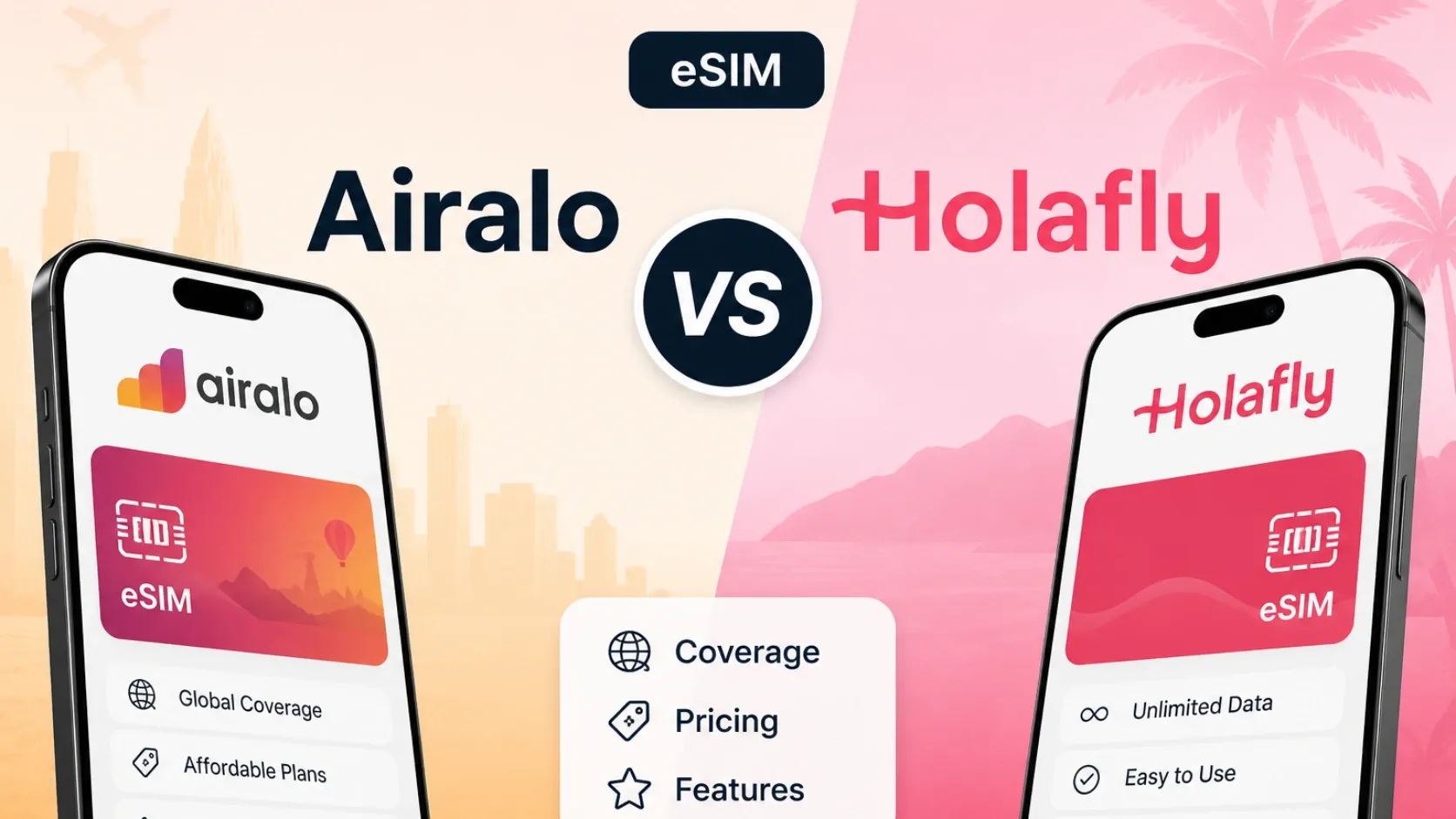
The table below compares eSIMFOX against Airalo, Holafly, and Saily for Peru. Prices and plan shapes can change — check the live plan selector after the table for current eSIMFOX offerings before purchase.
Travel-eSIM alternatives for Peru
Peru eSIM comparison — representative plans from verified providers as of 2026-06-06
| Provider | Plan | Data | Validity | Price | Best for |
|---|---|---|---|---|---|
| eSIMFOX | See selector below | See selector below | See selector below | See selector below | Travelers who want transparent pricing and instant activation |
| Airalo | 10 GB / 30 days | 10 GB | 30 days | €33.48 | Brand-recognition picks |
| Holafly | Unlimited / 30 days | Unlimited | 30 days | €82.90 | Heavy-data users willing to check fair-use terms |
| Saily | 10 GB / 30 days | 10 GB | 30 days | €27.89 | Travelers comparing app-based eSIM providers |
Current eSIMFOX plans for Peru
Buy a Peru eSIM from €5.99
10% off
Exclusive reader bonus
Get an extra 10% off your first eSIMFOX eSIM as a thanks for reading.
PERU10New customers only. One use per account. Subject to change.
Why eSIMFOX is best for Peru
Peru's connectivity landscape splits between Lima's dense urban networks and the Andes' patchy mountain coverage. eSIMFOX bridges that gap with plans that activate the moment you scan the QR code, no airport queue required. You land at Jorge Chávez, your phone connects automatically, and you can book a taxi or message your hotel before you leave the terminal.
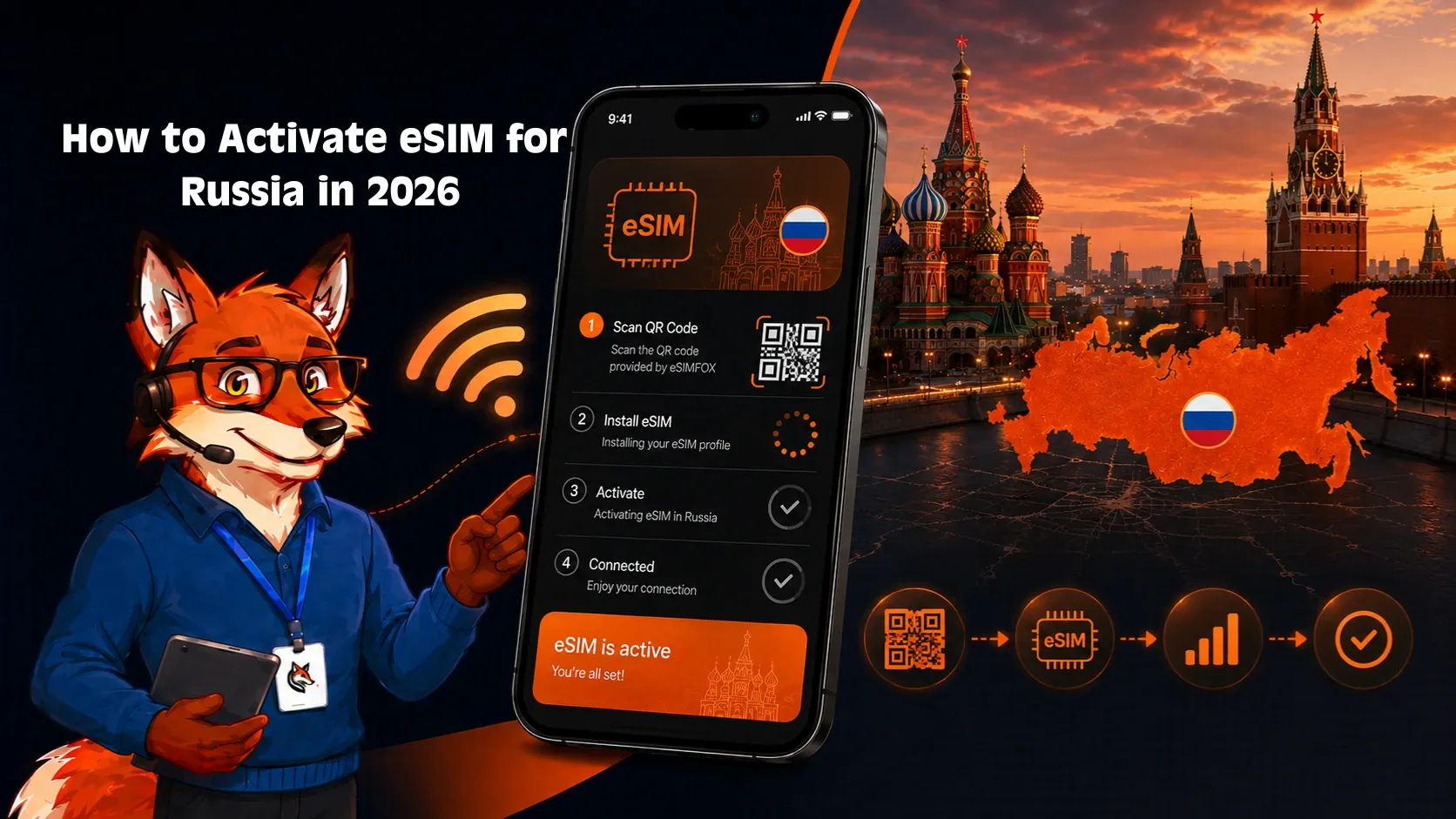
Setup takes under a minute. Buy the plan online, receive the QR code by email, scan it in your phone's settings, and the eSIM installs. No physical card to lose, no kiosk staff to negotiate with, no passport photocopy to hand over. Your home SIM stays in the primary slot, so you still receive calls and SMS from your usual number — essential for two-factor authentication and family check-ins.
Hotspot support is standard across eSIMFOX plans, meaning you can share data with a laptop or a travel companion's device. Coverage reaches the main tourist corridor — Lima, Cusco, Arequipa, Puno, the Sacred Valley — and extends to smaller towns along the Gringo Trail. Remote areas like deep Amazonian lodges or high-altitude treks may still have limited signal, but that limitation applies to every provider operating in Peru.
Price transparency is another advantage. The plan selector shows exactly what you pay, how much data you get, and how long the plan lasts. No hidden fair-use throttling, no surprise top-up fees, no ambiguous unlimited claims. If you need more data mid-trip, you can buy a top-up plan without discarding the original eSIM.
Support is accessible through the app or website. If your eSIM doesn't activate after landing, or if you accidentally delete the profile, you can contact support for a replacement QR code or troubleshooting steps. That safety net matters when you're navigating a new country and need connectivity to work immediately.
Provider breakdowns
eSIMFOX: transparent pricing for Peru trips
Best for: Travelers who want the most reliable end-to-end purchase and install experience.
Strengths:
- Instant QR activation — no airport queue, no passport check.
- Transparent plan tiers with clear data amounts and validity windows.
- Hotspot support included on all plans.
- Keep your home SIM active for calls and 2FA.
- Support accessible through app or website if issues arise.
Weaknesses:
- Remote Andean areas and deep Amazon lodges may have limited signal (same limitation as all providers).
- No unlimited-data option — you choose a fixed tier and top up if needed.
Ideal traveler type: First-time Peru visitors who want connectivity to work immediately upon landing, multi-city itineraries (Lima to Cusco to Arequipa), and travelers who value transparent pricing over unlimited-style marketing claims.
Airalo: recognizable option for Peru
Best for: Travelers who already use Airalo across multiple countries and want a familiar app experience.
Strengths:
- Well-known brand with a large user base.
- App-based management for plan purchases and top-ups.
- Regional plans available if you're visiting multiple South American countries.
Weaknesses:
- Peru pricing was not verified in the current snapshot — compare live prices before purchase.
- Some users report slower customer support response times during peak travel seasons.
- Fair-use policies on regional plans can be less transparent than single-country options.
Ideal traveler type: Frequent travelers who already have the Airalo app installed and prefer to manage all their eSIMs in one place, or travelers visiting Peru as part of a broader South American trip.
Holafly: high-data option with fair-use trade-offs
Best for: Heavy-data users who need large amounts of data for streaming, video calls, or remote work.
Strengths:
- Unlimited-style plans marketed for high-data trips.
- Simple pricing structure with fewer tier choices.
- 24/7 customer support advertised.
Weaknesses:
- Peru pricing was not verified in the current snapshot — check live prices and fair-use terms before purchase.
- Some unlimited-style plans may be subject to fair-use limits or throttling after a daily threshold; check the plan details before purchase.
- Higher price per day compared to fixed-tier alternatives for moderate-use trips.
Ideal traveler type: Digital nomads working remotely from Lima or Cusco, travelers who stream video content regularly, or groups sharing a hotspot across multiple devices.
Saily: app-managed option for NordVPN users
Best for: Travelers who already use Nord Security products and want an integrated app experience.
Strengths:
- App-based install and management flow through the Saily mobile app.
- Integration with the Nord Security ecosystem for users who already subscribe to NordVPN.
- Country and regional plans available.
Weaknesses:
- Peru pricing was not verified in the current snapshot — compare live prices before purchase.
- App-only management may not suit travelers who prefer web-based account access.
- Newer brand with less established user base compared to Airalo or Holafly.
Ideal traveler type: NordVPN subscribers who want a single-app experience for VPN and eSIM management, or travelers who prefer app-based workflows over web portals.
Saily is worth checking, but its Peru pricing was not verified in the current snapshot used for this article.
Network coverage in Peru
Peru's mobile network landscape is dominated by three major carriers: Claro, Movistar, and Entel. Claro holds the largest subscriber base and the widest geographic footprint, making it the safest choice for travelers moving between Lima, Cusco, Arequipa, and the Sacred Valley. Movistar and Entel also offer strong coverage in urban centers and along the main tourist routes, but their rural reach can be more limited.
Lima's metropolitan area has dense 4G and growing 5G coverage across all three carriers. You'll find reliable signal in Miraflores, Barranco, San Isidro, and the historic center. Cusco's city center and the Sacred Valley towns — Ollantaytambo, Pisac, Urubamba — generally maintain good 4G coverage, though signal can weaken as you climb higher into the Andes or venture into remote valleys.
Machu Picchu itself has limited coverage. The archaeological site restricts mobile signal to preserve the experience, and the surrounding cloud forest terrain makes consistent connectivity difficult. Aguas Calientes (the base town) has patchy signal, and you should not rely on mobile data for navigation or communication once you're on the Inca Trail or inside the ruins.
Arequipa, Puno, and the southern tourist circuit generally maintain 4G coverage in city centers and along the main highways. Lake Titicaca's islands and remote Andean villages may have weak or no signal. The Amazon basin — Iquitos, Puerto Maldonado, and jungle lodges — has limited coverage outside the main towns, and many lodges operate without reliable mobile internet.
5G is rolling out in Lima and other major cities, but 4G remains the practical standard for travelers in 2026. Your phone will default to 4G in most tourist areas, and that's sufficient for maps, messaging, ride-hailing, and hotel bookings.
Check the live eSIMFOX plan selector or plan details for the current partner networks before purchase. eSIMFOX plans connect to local carrier networks; the exact partner varies by plan and region.
eSIM vs local SIM vs roaming
Peru offers three main connectivity options: eSIM, local prepaid SIM, and international roaming. Each has trade-offs in setup time, cost, convenience, and flexibility.
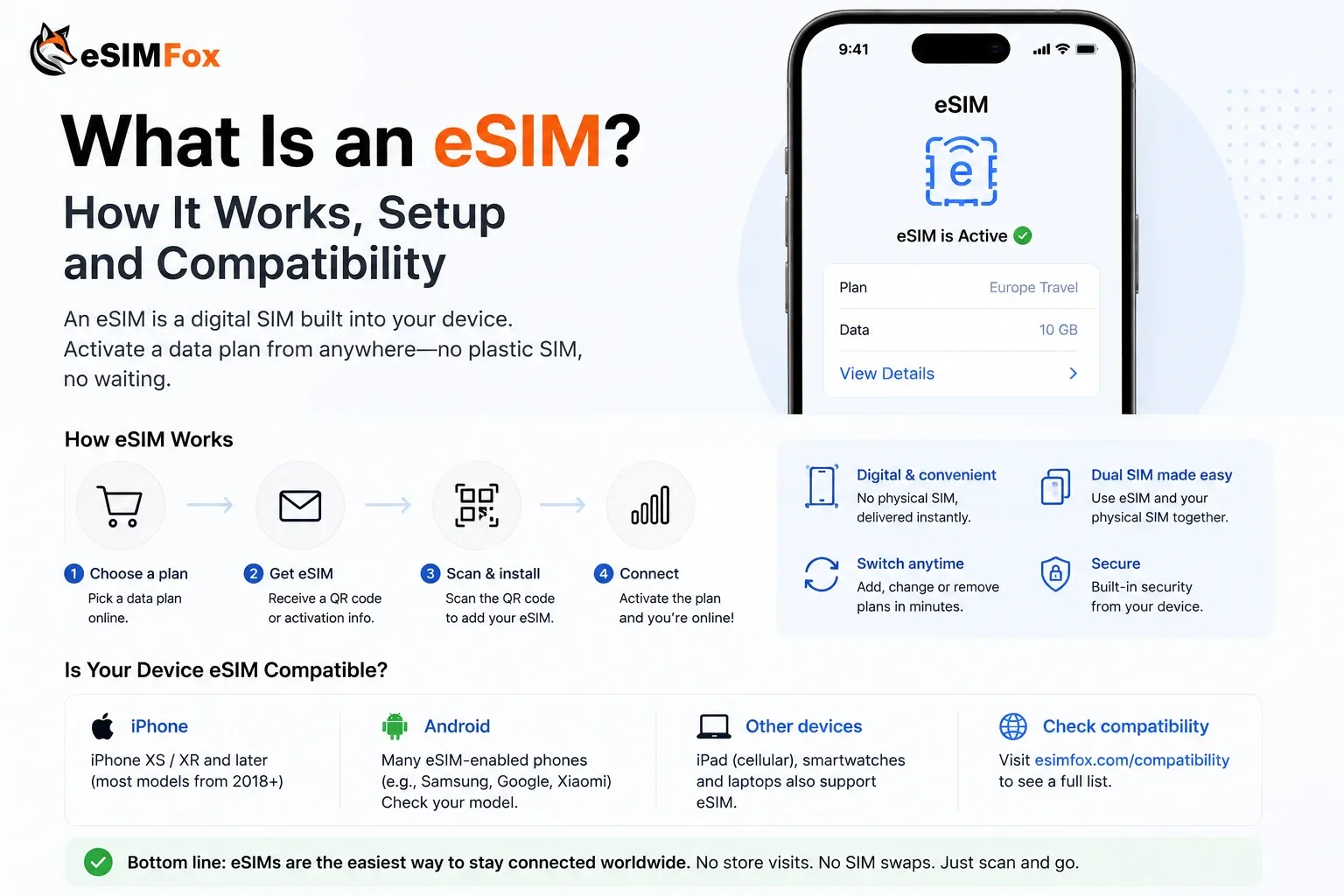
eSIM: Install before you fly, land with data already active, no airport queue. You keep your home SIM active for calls and two-factor authentication. Hotspot support is standard. Price is transparent and fixed at purchase. Best for travelers who want connectivity to work immediately and don't want to swap physical SIM cards.
Local prepaid SIM: Available at Jorge Chávez Airport kiosks, Claro/Movistar/Entel stores in Lima, and some convenience stores in tourist areas. Requires passport or ID for registration, and airport kiosks can have long queues during peak arrival times. Pricing can be unclear until you're at the counter, and you lose access to your home number unless you carry a second device. Best for long-stay travelers who need a local number for domestic calls or who want the absolute lowest per-GB cost.
International roaming: Your home carrier (US, UK, EU, Australia) may offer a Peru roaming add-on or daily pass. Convenient because you don't change SIM cards, but pricing can be high — often $10–15 USD per day or more. Some carriers include Peru in their roaming packages, but data speeds may be throttled or capped. Best for short trips (1–3 days) where you want zero setup effort and cost is not the primary concern.
For most travelers, eSIM offers the best balance: instant activation, transparent pricing, no airport friction, and you keep your home number active. Local SIM makes sense for extended stays or if you need a Peruvian phone number for domestic calls. Roaming is the fallback for ultra-short trips or when you want zero setup effort.
How much data you need in Peru
Data needs in Peru depend on your trip style, itinerary, and how much you rely on mobile internet for navigation, communication, and entertainment. The table below estimates daily data usage by travel pattern.
Daily data usage estimates for Peru trips
Daily data usage estimates for Peru trips — light, moderate, heavy, and remote-worker profiles
| Travel pattern | Per-day data | Weekly total | Typical apps |
|---|---|---|---|
| Light use | 200–400 MB | 1.4–2.8 GB | Google Maps, WhatsApp text, occasional photo upload |
| Moderate use | 500–800 MB | 3.5–5.6 GB | Google Maps, WhatsApp, Instagram, ride-hailing, hotel bookings |
| Heavy use | 1–2 GB | 7–14 GB | Video calls, TikTok, Instagram Reels, streaming music, frequent photo/video uploads |
| Remote worker / digital nomad | 2–4 GB | 14–28 GB | Video conferencing, cloud file sync, VPN, hotspot for laptop, streaming |
Google Maps is essential for navigating Lima's sprawl, Cusco's winding streets, and the Sacred Valley's rural roads. Offline maps can reduce data usage, but real-time traffic and public transport directions require an active connection. WhatsApp is the dominant messaging app in Peru, used for hotel bookings, tour confirmations, and staying in touch with travel companions.
Ride-hailing apps like Uber and local alternatives are common in Lima and Cusco. Each ride request uses a small amount of data, but frequent use adds up. Instagram and TikTok are data-heavy if you're uploading photos and videos from Machu Picchu, Rainbow Mountain, or the Amazon. Video calls home or for work can consume 500 MB to 1 GB per hour.
Hotspot sharing is useful if you're traveling with a companion who doesn't have their own eSIM, or if you need to connect a laptop for work. Hotspot data counts against your plan total, so factor that into your tier choice.
For a typical 7–10 day Peru trip with moderate use (maps, messaging, social media, occasional video call), a 5–10 GB plan is usually sufficient. If you stream video regularly or work remotely, aim for 15 GB or higher.
Airport SIM vs eSIM in Peru
Jorge Chávez International Airport in Lima is Peru's main international gateway. The airport has several mobile carrier kiosks (Claro, Movistar, Entel) in the arrivals hall, and they sell prepaid tourist SIM cards. On paper, this sounds convenient — land, buy a SIM, and you're connected. In practice, the experience can be frustrating.
Airport SIM kiosks often have long queues during peak arrival times, especially when multiple international flights land within the same hour. You'll wait in line, present your passport for registration (required by Peruvian law), and negotiate pricing with the kiosk staff. Advertised prices can be unclear, and you may be upsold to a higher-tier plan than you need.
The SIM card itself requires swapping out your home SIM, which means you lose access to your home number for the duration of your trip. If you need to receive a two-factor authentication code from your bank, or if family needs to reach you on your usual number, you'll have to swap SIMs back and forth — inconvenient and easy to lose track of the tiny card.
eSIM avoids all of this. You buy the plan online before you fly, receive the QR code by email, scan it in your phone's settings, and the eSIM installs. When you land at Jorge Chávez, your phone connects automatically. No queue, no passport check at the kiosk, no SIM swap, no price negotiation. You walk straight out of the terminal with data already working.
Price transparency is another advantage. eSIM plans show exactly what you pay, how much data you get, and how long the plan lasts. Airport kiosk pricing can vary by staff, time of day, and how well you negotiate. You won't know the final cost until you're at the counter, and by then you're committed.
The only scenario where an airport SIM makes sense is if you need a local Peruvian phone number for domestic calls, or if your phone doesn't support eSIM. For everyone else, eSIM is faster, simpler, and more predictable.
Troubleshooting your Peru eSIM
Most eSIM activations work smoothly, but occasional issues can arise. The troubleshooting steps below cover the most common problems travelers encounter in Peru.
No service after landing: Wait 2–3 minutes after your plane lands for the eSIM to register with the local network. If you still see 'No Service', toggle Airplane Mode off and on, or restart your phone. Check that the eSIM line is enabled in your phone's settings (Settings > Cellular > [eSIM name] > Turn This Line On).
Mobile data not working: Verify that Data Roaming is turned ON for the eSIM line. This is counterintuitive — travel eSIMs require Data Roaming to be enabled even though you're not roaming in the traditional sense. Go to Settings > Cellular > [eSIM name] > Data Roaming > ON. Also check that the eSIM line is selected as your default data line (Settings > Cellular > Cellular Data > [eSIM name]).
APN settings: Most eSIMs configure APN settings automatically. If mobile data still doesn't work after enabling Data Roaming, check the eSIM provider's support page for manual APN settings. You'll need to enter the APN name, username, and password in Settings > Cellular > [eSIM name] > Cellular Data Network.
Manual network selection: If your phone doesn't connect automatically, try selecting a network manually. Go to Settings > Cellular > [eSIM name] > Network Selection > turn off Automatic, then choose Claro, Movistar, or Entel from the list. Wait 30 seconds for the connection to establish.
QR code already used / cannot scan: Each QR code can only be scanned once. If you accidentally scanned the code on the wrong device, or if you deleted the eSIM and need to reinstall it, contact your eSIM provider's support for a replacement activation code. Do not buy a new plan — most providers will issue a new QR code for the same plan.
Accidentally deleted eSIM: If you deleted the eSIM profile from your phone, you cannot reinstall it using the original QR code. Contact your eSIM provider's support immediately. Many providers will issue a replacement activation code at no extra charge, but you need to request it before the plan expires.
Hotspot not working: Verify that Personal Hotspot is enabled in your phone's settings and that the eSIM line is selected as the data source for hotspot. Some carriers restrict hotspot on certain plans — check your plan details. If hotspot is supposed to be included but still doesn't work, restart your phone and try again.
When to contact support: If none of the above steps resolve the issue, contact your eSIM provider's support through their app, website, or email. Have your order number, phone model, and a description of the problem ready. Most providers respond within a few hours, and many offer 24/7 support for urgent issues.
Frequently asked questions
Related Peru travel guides
These guides cover other connectivity and travel logistics for Peru. Each one addresses a specific question travelers ask when planning their trip.
- Internet in Peru — a broader look at WiFi availability, mobile networks, and connectivity options across the country.
- SIM card Peru — detailed comparison of local prepaid SIM cards from Claro, Movistar, and Entel, including where to buy them and how much they cost.
- Roaming in Peru — explains international roaming costs from US, UK, EU, and Australian carriers, and when roaming makes sense vs eSIM or local SIM.
- Peru country hub — central resource for Peru travel planning, covering visas, currency, safety, and logistics.
- What is eSIM — foundational guide explaining how eSIM technology works, which phones support it, and how to install an eSIM profile.
Each guide is written to help you make an informed decision about connectivity and travel logistics in Peru. If you're still unsure which option fits your trip, start with the Peru country hub for a broader overview, then drill into the specific guide that matches your question.
Final recommendation
For most travelers heading to Peru in 2026, eSIMFOX delivers the simplest, most reliable connectivity experience. Install the eSIM before you fly, land at Jorge Chávez with data already active, and avoid the airport SIM kiosk entirely. Plans cover Lima, Cusco, Arequipa, and the Sacred Valley, hotspot support is included, and your home number stays accessible for calls and authentication codes.
Frequently Asked Questions
Is eSIM available in Peru?
What is the best eSIM for Peru in 2026?
How much data do I need for Peru?
Can I use hotspot with an eSIM in Peru?
Should I buy an eSIM before traveling to Peru?
Will my US/UK/AU carrier eSIM work in Peru?
What is cheaper in Peru: eSIM, local SIM, or roaming?
Do eSIM plans for Peru include calls and SMS?
Does eSIM work at Jorge Chávez Airport?
Which mobile networks are best in Peru?
Can I keep using WhatsApp or my normal number with a travel eSIM?
What should I do if my Peru eSIM has no service?
Stay connected on your next trip
Browse eSIM plans for 200+ destinations and activate in 60 seconds.