Round of 32 schedule (June 28 – July 3, 2026)
The Round of 32 is a new addition to the World Cup, introduced with the 48-team format. This knockout round runs from June 28 through July 3, 2026, and features 16 matches over six days.
Seeding for the Round of 32 is based on group stage performance. The top two teams from each group (24 teams) advance automatically, along with the eight best third-place finishers across all groups. FIFA's ranking criteria for third-place teams prioritize points, then goal difference, then goals scored, then fair play points, then drawing lots if necessary.
The Round of 32 bracket pairs teams based on their group finish. For example, the winner of Group A might face the runner-up of Group B, while the winner of Group C faces a third-place finisher from Groups D, E, or F. The exact pairings depend on the group stage results and the third-place ranking.
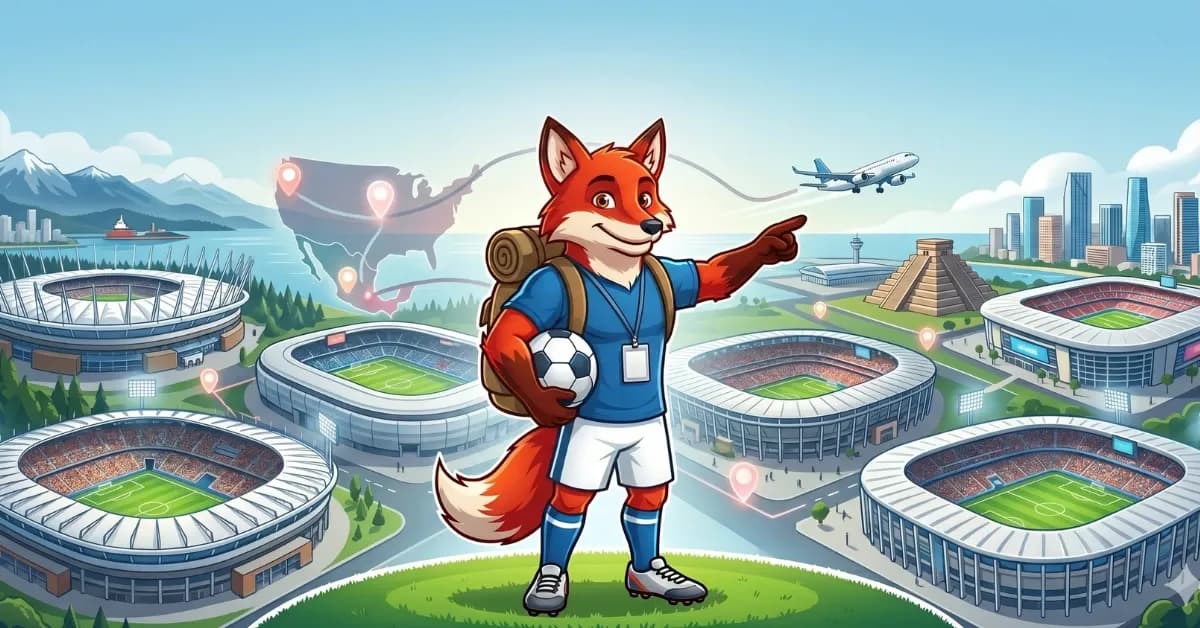
Matches in this round are distributed across host cities in all three countries, though the majority are expected to be in the USA. Fans should prepare for potential cross-border travel if their team advances from a group stage match in Canada or Mexico to a Round of 32 match in the USA.
The Round of 32 is single-elimination. Lose and you're out. This raises the stakes significantly compared to the group stage, where a team can recover from one loss. For fans, it also means match-day intensity increases, and the atmosphere in stadiums shifts from festival-style group stage energy to high-pressure knockout drama.
Round of 16 schedule (July 4 – July 7, 2026)
The Round of 16 runs from July 4 through July 7, 2026, featuring eight matches over four days. This is the second knockout round and the point where the tournament field narrows to the final 16 teams.
The bracket for the Round of 16 is determined by the Round of 32 results. Winners from the Round of 32 are paired based on the pre-tournament bracket structure, which FIFA publishes after the group stage draw.
All Round of 16 matches are expected to be hosted in the USA, concentrated in major stadiums with high capacity and strong infrastructure. This consolidation reduces travel complexity for teams and fans compared to the earlier rounds.
For fans following a team from the group stage through the Round of 16, expect to have traveled across at least two countries and possibly three or four cities by this point. The Round of 16 is often where underdog stories either continue or end, and where traditional powerhouses reassert dominance.
July 4 is Independence Day in the USA, which adds a layer of local celebration to the tournament atmosphere. Expect fireworks, parades, and heightened security around stadiums hosting matches on that date.
Quarter-finals (July 9 – July 11, 2026)
The quarter-finals take place from July 9 through July 11, 2026, with four matches over three days. By this stage, only eight teams remain, and every match is a potential classic.
Quarter-final host cities are pre-assigned by FIFA and will be announced alongside the full match schedule. Expect these matches to be held in the USA's largest and most iconic stadiums, such as MetLife Stadium (New York/New Jersey), SoFi Stadium (Los Angeles), AT&T Stadium (Dallas), or Mercedes-Benz Stadium (Atlanta).
The quarter-finals are where the tournament's narrative solidifies. Favorites either confirm their status or fall to challengers. For fans, this is the stage where ticket prices peak and availability tightens significantly.
If you're planning to attend a quarter-final match, book accommodation 3–6 months in advance. Match-day hotel prices in host cities can surge 200–400% compared to non-match days, and availability within 10 kilometers of the stadium often sells out weeks ahead.
Semi-finals (July 14 – July 15, 2026)
The semi-finals are scheduled for July 14 and July 15, 2026, with two matches determining the finalists. These matches are among the most-watched sporting events globally, and the atmosphere in the host cities reaches peak intensity.
Semi-final host cities are pre-assigned and will be confirmed in FIFA's official schedule. Historically, semi-finals are held in the largest available stadiums, often in cities with strong international connectivity and hotel capacity.
For fans, the semi-finals represent the culmination of weeks of travel, planning, and emotional investment. If your team reaches this stage, expect to compete with tens of thousands of other fans for flights, hotels, and match-day transport.
The semi-finals also mark the final opportunity for neutrals to see multiple top-tier teams in action before the final. Many fans who didn't secure final tickets attend one or both semi-finals as their tournament highlight.
Third-place match and final (July 18 – July 19, 2026)
The third-place match is scheduled for July 18, 2026, and the final for July 19, 2026. The third-place match determines which of the two semi-final losers finishes third in the tournament, while the final crowns the world champion.
MetLife Stadium in East Rutherford, New Jersey, hosts the final with a capacity of 82,500. MetLife Stadium is the home of the NFL's New York Giants and New York Jets, and it has hosted major international events including the 2014 Super Bowl and the 2016 Copa América Centenario final.
The final is the single most-watched match of the tournament, with global viewership often exceeding 1 billion. For fans attending in person, expect security screening to begin several hours before kickoff, and plan for significant post-match congestion around the stadium and transit hubs.
The third-place match, while lower-profile than the final, still draws strong attendance and offers a more relaxed atmosphere. It's often a chance to see two high-quality teams play with less pressure than the knockout rounds.
For fans traveling to the final from outside the New York metro area, book flights and accommodation as early as possible. The New York/New Jersey region has extensive hotel capacity, but demand during the final weekend will be extreme.
Following a team across host countries: travel and connectivity
One of the defining challenges of the 2026 World Cup is cross-border travel. A team advancing from the group stage to the final could play matches in Mexico, Canada, and the USA over a 14-day span. For fans following that team, each border crossing means new entry requirements, new currency, and—critically—new mobile connectivity.
The typical knockout bracket sends teams across at least two countries. For example, a team might play its Round of 32 match in Toronto, its Round of 16 match in Dallas, its quarter-final in Los Angeles, and its semi-final in Atlanta. That's two countries, four cities, and roughly 6,000 kilometers of travel in two weeks.
Each border crossing requires compliance with entry rules. USA entry requires an ESTA for visa-exempt travelers or a visa for others. Canada requires an eTA for visa-exempt travelers. Mexico requires an FMM (tourist card) for most visitors. Processing these documents takes time, and mistakes can delay or block entry.
Mobile connectivity is where the friction compounds. If you buy a local SIM or eSIM in Mexico for the opening match, that plan stops working when you cross into the USA for the Round of 32. You then need a second plan for the USA, and a third plan if your team plays a match in Canada. Three separate plans mean three separate installs, three separate bills, and three separate fair-use policies.
A regional eSIM covering all three host countries solves this. Install once before departure, use the same plan across the USA, Canada, and Mexico, and avoid the airport SIM kiosk queue at every border. For the 2026 World Cup, eSIMFOX offers a North America regional plan covering all three countries, with data tiers from 5 GB to 50 GB and validity from 15 to 60 days.
The connectivity use case during the tournament is constant. You need data for: ride-hailing apps (Uber, Lyft, Cabify), navigation (Google Maps, Apple Maps), messaging (WhatsApp, Telegram, LINE), mobile tickets (FIFA's ticketing app delivers tickets digitally), live match updates, hotel check-ins, and social media. A 10 GB plan typically covers 7–10 days of moderate use; a 20 GB plan covers 14–21 days.
For fans planning to attend multiple matches across multiple countries, the regional eSIM is the simplest connectivity solution. Install it before you leave home, activate it when you land, and use it throughout the tournament without worrying about border crossings.
2026 World Cup groups and teams
The 2026 World Cup features 12 groups of 4 teams each, labeled Groups A through L. The final team assignments depend on the intercontinental playoff results, which conclude in March 2026, and the official draw, which FIFA will conduct after the playoffs.
As of May 2026, the majority of the 48 teams are confirmed through regional qualification tournaments. The remaining slots will be filled by playoff winners. Once the draw is complete, FIFA will publish the full group assignments and match schedule.
The table below shows the group structure and the host cities assigned to each group's matches. Team names will be updated once the draw is finalized.
Each group plays six matches total: Team A vs Team B, Team A vs Team C, Team A vs Team D, Team B vs Team C, Team B vs Team D, and Team C vs Team D. The top two teams from each group advance to the Round of 32, along with the eight best third-place finishers.
For fans, the group stage is the most accessible phase of the tournament. Tickets are more available, prices are lower than knockout rounds, and the festival atmosphere is at its peak. If you're planning to attend matches in person, the group stage offers the best value and the widest range of matchups.
Essential travel tips for FIFA World Cup 2026 attendees
Attending the 2026 World Cup requires planning beyond match tickets. This section covers the four most common friction points for fans traveling to multiple host cities: connectivity, accommodation, transport, and packing.
Stay connected across multiple countries
Mobile data is essential throughout the tournament. You need it for ride-hailing apps, navigation, mobile tickets, messaging, and real-time match updates. The challenge is that the tournament spans three countries, and most single-country SIM or eSIM plans stop working at the border.
The simplest solution is a regional eSIM covering the USA, Canada, and Mexico. eSIMFOX offers a North America regional plan starting at $13 for 10 GB valid for 30 days. Install the eSIM before you leave home, activate it when you land, and use it across all three countries without buying separate plans at each border.
Compare this to the alternative: buying a local SIM or eSIM in Mexico for the opening match, then a second plan in the USA for the Round of 32, then a third plan in Canada if your team plays there. Three separate plans mean three separate installs, three separate bills, and the risk of running out of data mid-trip and scrambling for a top-up.
A regional eSIM also lets you keep your home SIM active in the second SIM slot (if your phone supports dual SIM). This means you can still receive calls and texts on your home number while using the eSIM for data. For two-factor authentication, banking alerts, and staying reachable to family, this dual-SIM setup is far more convenient than swapping SIMs.
Data usage during the tournament is higher than typical travel. Expect to use 1–2 GB per day if you're navigating between stadiums, using ride-hailing apps, streaming match highlights, and posting to social media. A 10 GB plan covers 7–10 days of moderate use; a 20 GB plan covers 14–21 days. Use the data usage calculator to estimate your needs based on your itinerary.
Multi-city travel planning
Book accommodation 3–6 months ahead of the tournament. Match-day hotel prices in host cities can surge 200–400% compared to non-match days, and availability within 10 kilometers of the stadium often sells out weeks in advance.
If you're following a team through the knockout rounds, expect to move between cities every 3–5 days. Internal flights are the fastest option for long distances (e.g., Los Angeles to New York), but they add cost and airport time. Amtrak and VIA Rail offer slower but more scenic alternatives for shorter routes (e.g., New York to Philadelphia, or Toronto to Montreal).
Road trips work for clusters of nearby host cities. For example, you could drive from Dallas to Houston to Kansas City over 10 days, attending group stage matches in all three cities. Rental car availability tightens during the tournament, so book early and expect higher rates.
Cross-border timing matters. The USA–Canada land border crossings can have wait times of 1–3 hours during peak periods, especially around major events. The USA–Mexico border crossings are slower, often 2–4 hours. If you're driving between countries, add buffer time to your itinerary.
Getting around host cities
Each host city has its own transit system, and familiarity with local options saves time and money. New York has the subway and MetroNorth; Los Angeles has the Metro (limited coverage, so ride-hailing is common); Mexico City has the Metro and Metrobús; Toronto has the TTC; Vancouver has the SkyTrain.
Ride-hailing apps (Uber, Lyft, Cabify) are the most flexible option, but they require mobile data. Surge pricing around stadiums on match days can triple normal fares, so budget accordingly. Pre-booking a ride 30–60 minutes before you need it can sometimes avoid the worst surge.
Public transit is cheaper but slower, and it can be crowded on match days. If you're using transit to reach the stadium, arrive 90–120 minutes before kickoff to account for delays and security screening.
Walking is underrated. Many host cities have walkable downtown cores, and walking between your hotel and nearby restaurants, bars, or fan zones is often faster than waiting for a ride. Download offline maps before you arrive so you can navigate without burning data.
What to pack for World Cup travel
Stadium bag policies vary by venue, but most host cities enforce a clear-bag rule. Bring a clear plastic bag (quart-size or smaller) for your phone, wallet, keys, and tickets. Backpacks, large purses, and opaque bags are often prohibited.
Weather in June and July varies significantly across the host cities. Mexico City is mild (15–25°C / 59–77°F) but can have afternoon rain. Toronto and Vancouver are warm (20–28°C / 68–82°F) with occasional rain. Southern USA cities like Dallas, Houston, and Miami are hot and humid (28–35°C / 82–95°F). Pack layers and check the forecast for each city on your itinerary.
A portable battery is essential. Match days are long—security screening, pre-match atmosphere, the match itself, post-match congestion—and your phone will drain faster than usual. A 10,000 mAh battery can recharge most phones 2–3 times.
Confirm your phone supports eSIM before you travel. Most iPhones from iPhone XS onward support eSIM, as do many recent Android models (Samsung Galaxy S20 and newer, Google Pixel 3 and newer). Check the eSIM compatibility checker if you're unsure.
How to watch the FIFA World Cup 2026 matches
If you're not attending matches in person, or if you want to catch matches your team isn't playing in, broadcast and streaming options vary by country.
In the USA, Fox Sports holds the English-language broadcast rights, and Telemundo holds the Spanish-language rights. Both networks will stream matches via their apps and websites, though you'll need a cable login or a streaming service subscription (YouTube TV, Hulu + Live TV, FuboTV) to access live streams.
In Canada, TSN, CTV, and RDS share the broadcast rights. TSN and RDS offer streaming via their apps, again requiring a cable login or a TSN Direct / RDS Direct subscription.
In Mexico, Televisa and TV Azteca hold the rights. Both offer free-to-air broadcasts, and Televisa streams matches via its Blim TV app.
International streaming options include BBC iPlayer and ITVX in the UK (both free with a UK TV license), beIN Sports in the Middle East and North Africa, and DAZN in parts of Europe. Availability varies by region, and some services are geo-restricted.
For fans traveling during the tournament, mobile streaming is the most flexible option. Most broadcaster apps work on smartphones and tablets, but they require strong mobile data. A 90-minute match streamed at standard definition (720p) uses roughly 1–1.5 GB of data; high definition (1080p) uses 2–3 GB. If you're streaming multiple matches per day, budget your data plan accordingly.
If you're watching from a hotel or Airbnb, check whether the accommodation includes cable or streaming service access. Many hotels in the USA and Canada offer in-room access to Fox Sports or TSN, which can save you from burning mobile data.
Tickets for the 2026 World Cup are sold exclusively through FIFA's official ticketing portal at FIFA.com/tickets. Third-party ticket resellers are not authorized, and tickets purchased outside the official portal carry a high risk of being counterfeit or invalid.
FIFA typically runs ticket sales in three phases: a random-draw phase (fans apply for tickets, and FIFA allocates them via lottery), a first-come-first-served phase (remaining tickets are sold on a rolling basis), and a last-minute phase (unsold or returned tickets are released close to the tournament).
Tickets are delivered digitally via FIFA's mobile ticketing app. You'll receive a QR code on your phone, which you present at the stadium gates. This means you need mobile data to access your ticket. If your phone dies or you lose connectivity, you may not be able to enter the stadium.
Resale is only permitted through FIFA's official resale platform. If you can no longer attend a match, you can list your ticket for resale at face value. Buyers purchase through the same official portal. Tickets resold outside this system are void, and FIFA can cancel them without refund.
Payment for tickets is processed via major credit cards (Visa, Mastercard, American Express). Some fans in certain countries report processing delays during peak sales windows, so apply early and monitor your email for confirmation.
Ticket prices vary by match stage and seat category. Group stage tickets typically range from $50 to $300 USD. Knockout round tickets range from $100 to $600 USD. Final tickets can exceed $1,000 USD for premium seats. Prices are set by FIFA and published on the ticketing portal.